Seams That Reopen
Joints patched with sealant open again when the panel keeps moving under the bead, sometimes within a single season. Fixing the movement or engagement behind the bead is what closes it for good.

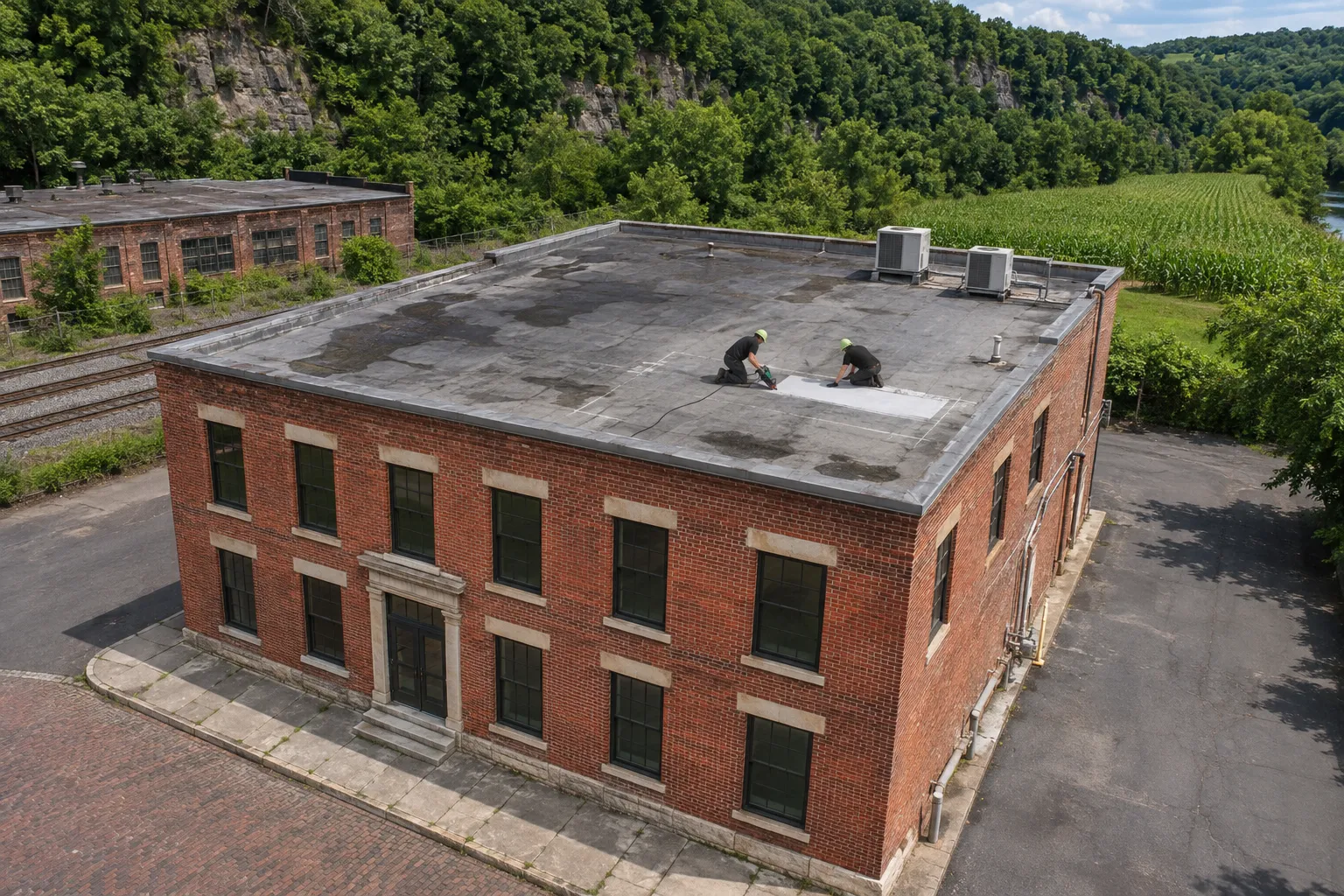
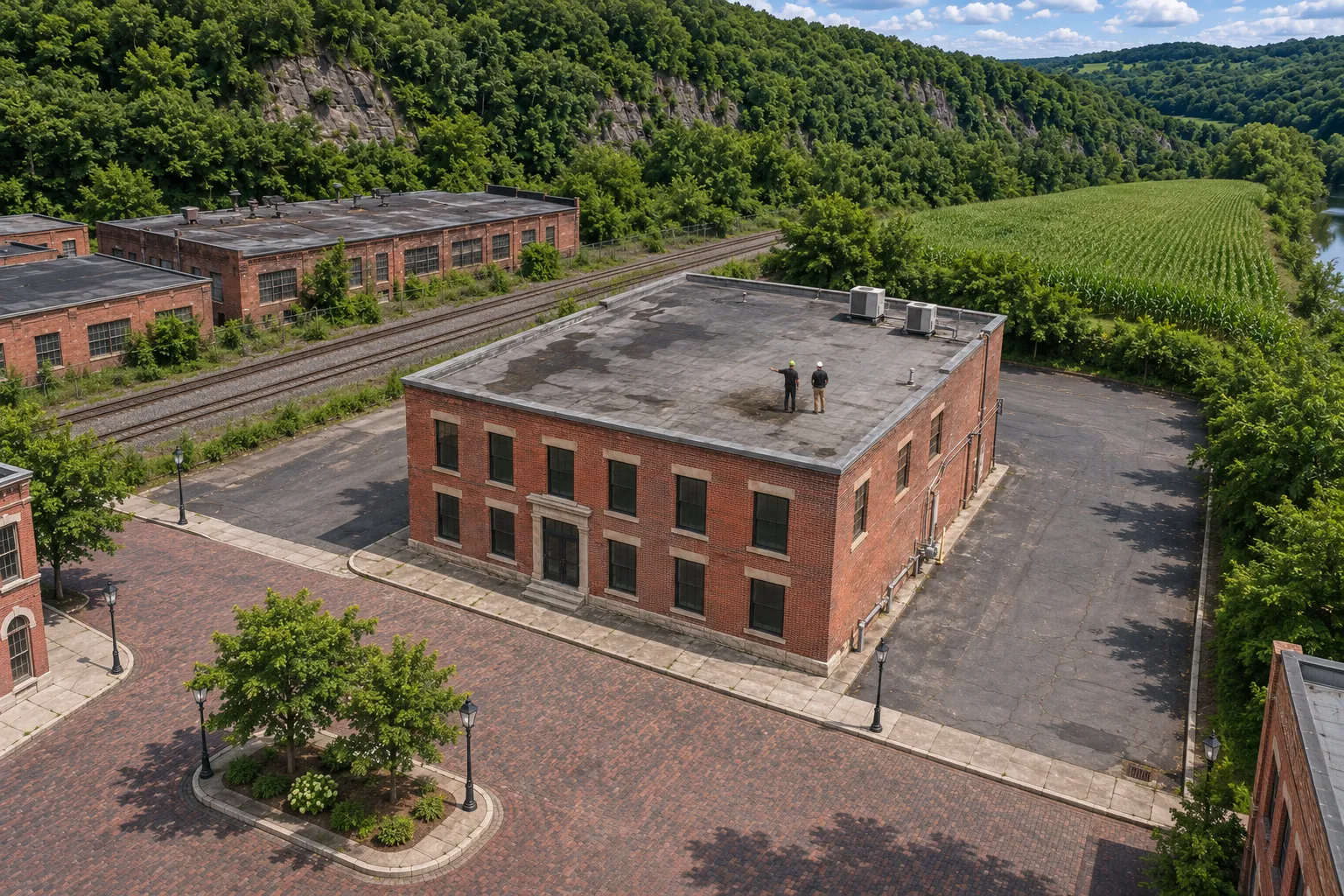
As an East Stroudsburg commercial roof repair contractor, we repair metal seams, fasteners, and laps that keep leaking on shops, garages, and storage buildings.
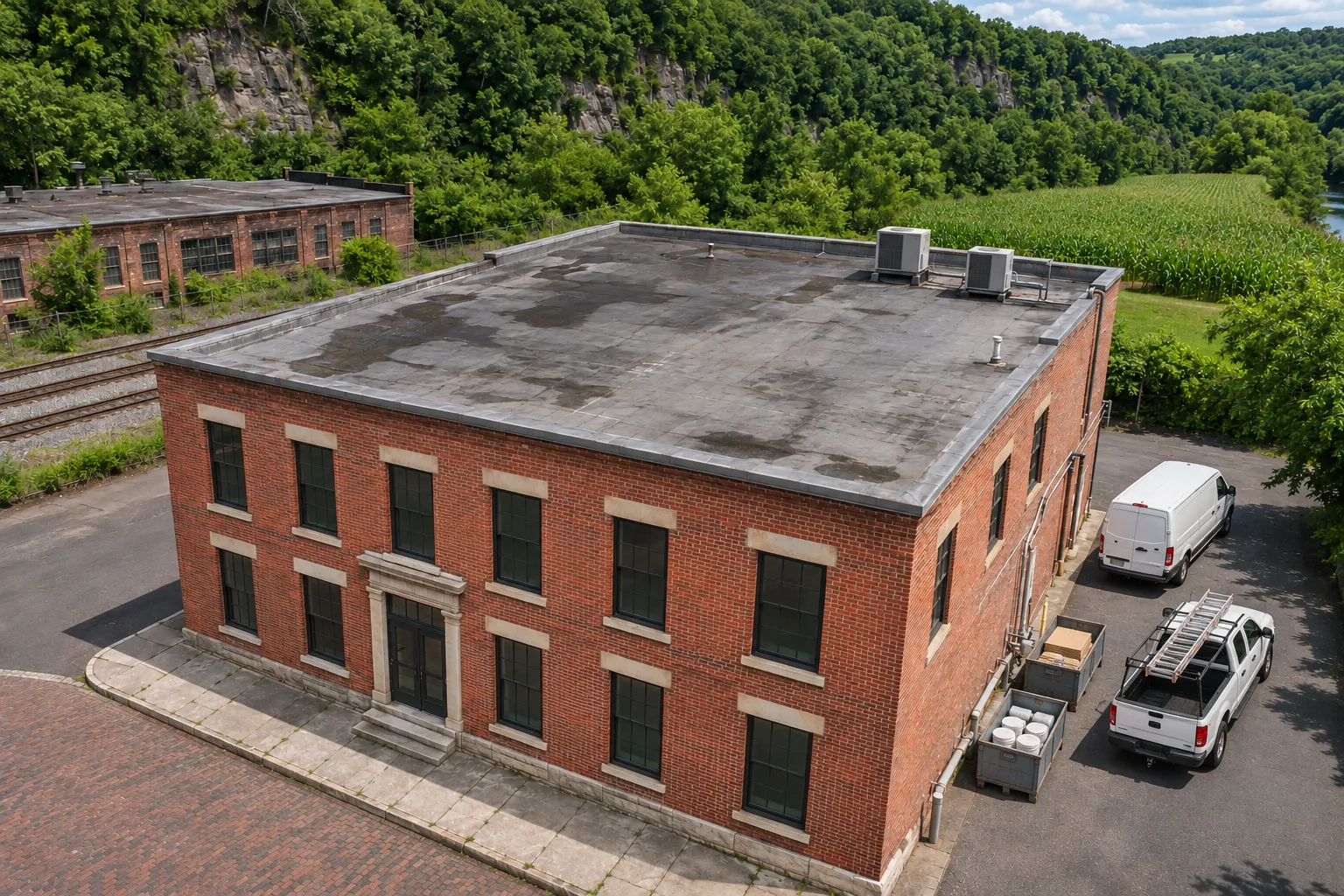
Much of our East Stroudsburg commercial roof repair work involves shop and storage roofs whose metal seams have been patched at least once before.
A seam that leaks again after a patch is telling you the cause is still there. Panel movement, poor seam engagement, or loose fastening keeps opening the joint under the new sealant.
Winters in the Pocono foothills bring long freeze-thaw stretches, so we schedule sealant and fastener work for dry days and plan temporary measures when the cold blocks a lasting repair.
These conditions keep metal roofs leaking around East Stroudsburg until the real cause is fixed.
Joints patched with sealant open again when the panel keeps moving under the bead, sometimes within a single season. Fixing the movement or engagement behind the bead is what closes it for good.
Repeated tightening strips holes in thin purlins, so screws never seat against the washer. Larger screws or added purlin blocking give the new fasteners something solid to bite.
Water trapped in a lap freezes and pries the joint wider through each cold snap. Drying and resealing the lap before winter stops the cycle.
Moisture held in side laps rusts the metal from inside, where nobody sees it. Panels that have rusted through are swapped by the run, with matching profile and fastening.
Closure strips shrink and crack, letting wind-driven snow and rain in at the ends. New closures cut to the panel profile close those ends again.
Layers of tape and mastic hide the joint that actually failed and trap water against it. Removing them carefully shows the actual seam, screw, or panel edge underneath.
Fixing the joint itself ends the patch cycle on a metal building.
Correcting the movement, engagement, or fastening behind a leaking seam lets the repair hold through the next winter instead of opening again with the first hard freeze.
Garages and shop bays stay usable without buckets under the laps.
Stopping drips at the seams protects purlins and clips from rust.
One repair at the source replaces a yearly round of new sealant.
Each repair service fits East Stroudsburg properties a little differently.
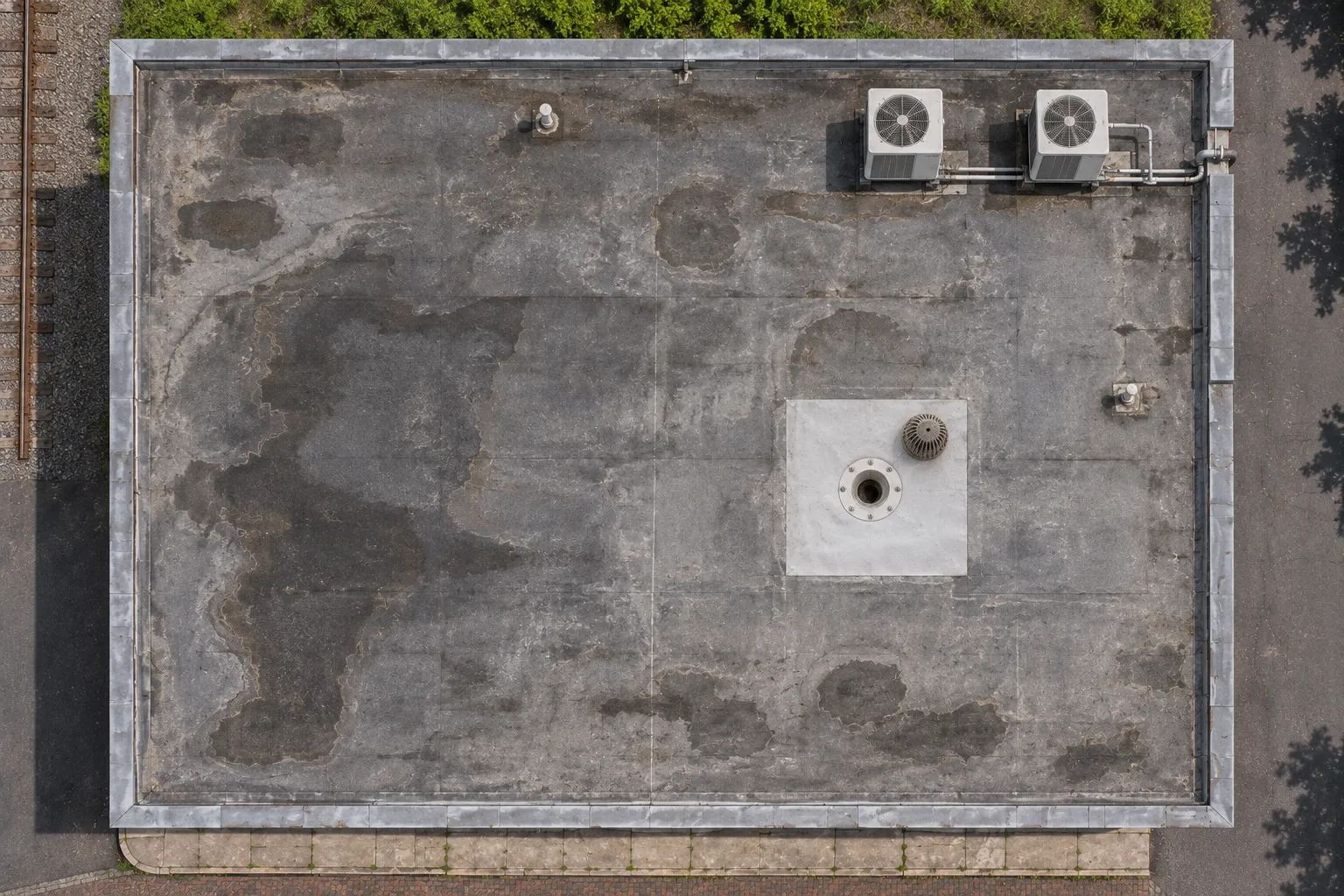
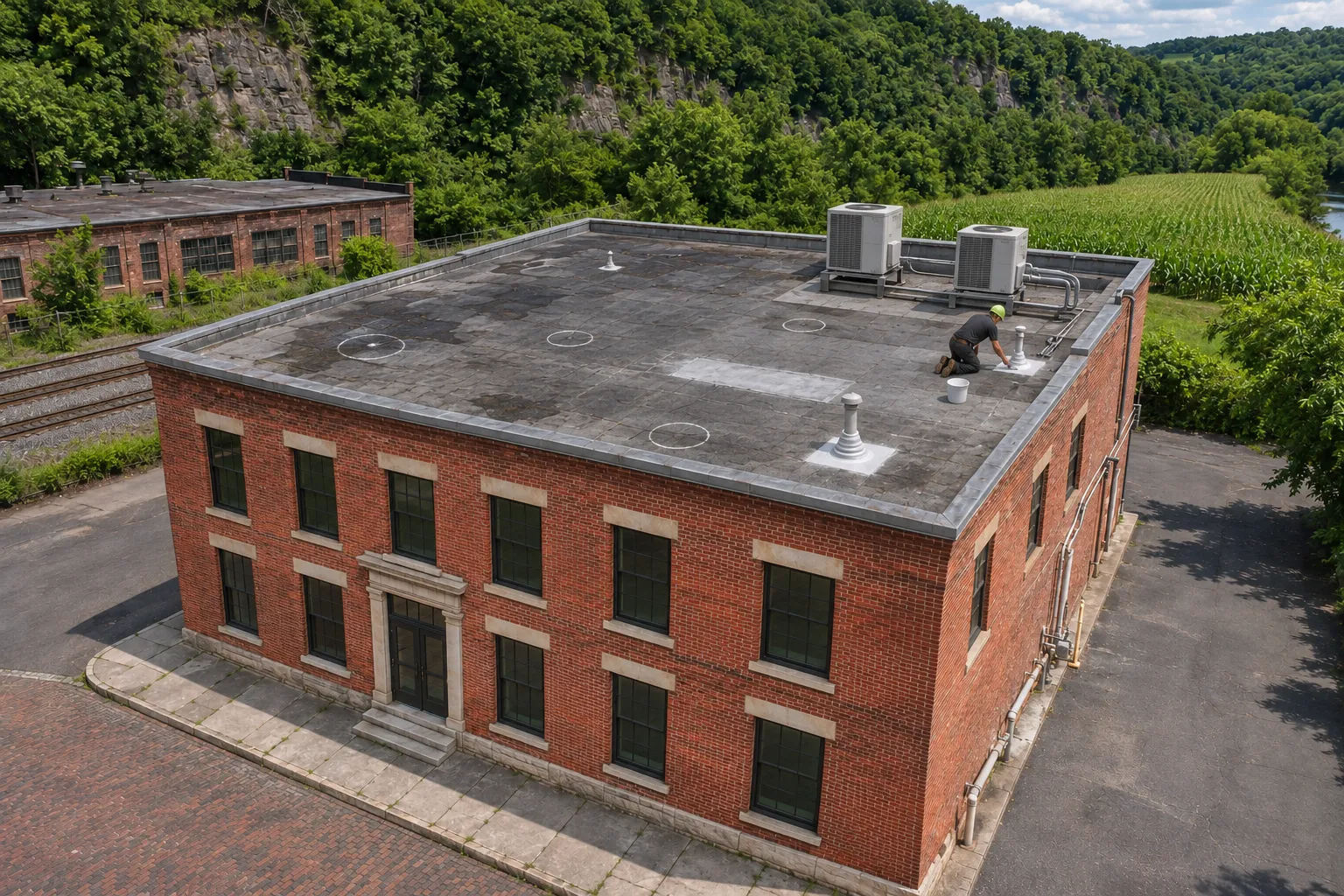
Flat office or loading sections attached to East Stroudsburg metal buildings with tired seams.
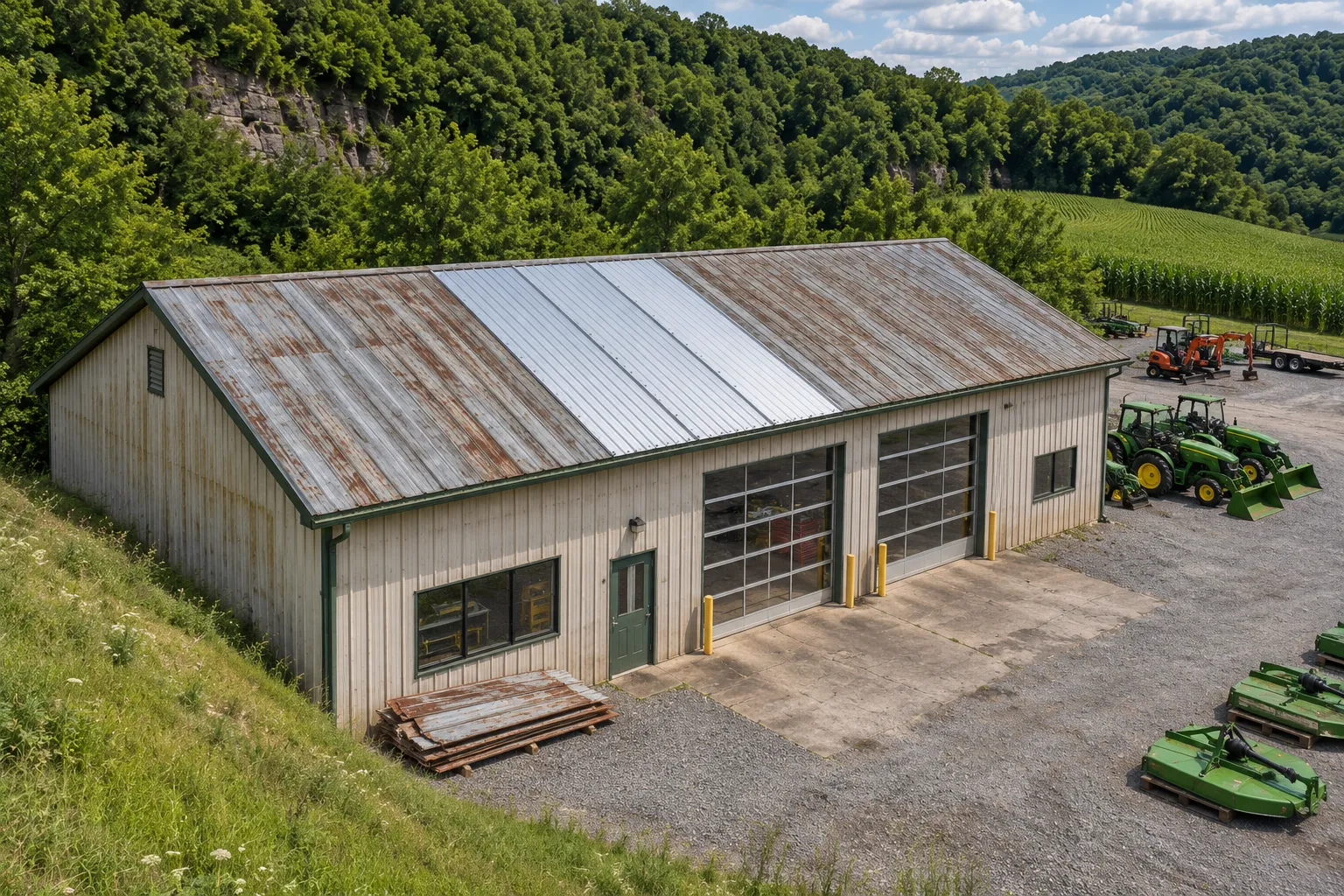
Ribbed and standing-seam roofs in East Stroudsburg whose seams and screws keep leaking.
East Stroudsburg leaks that show up only with melting snow or wind-driven rain.
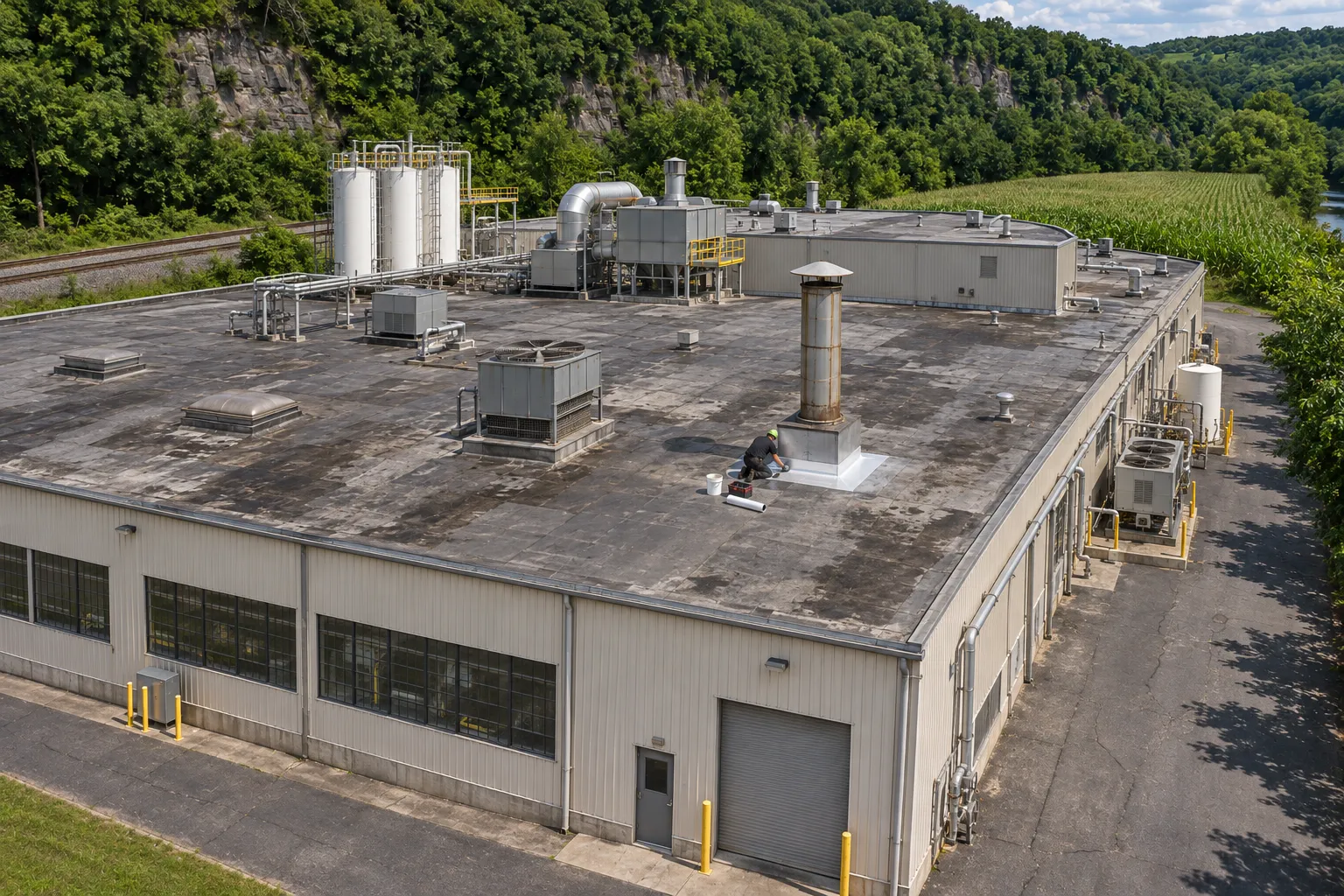
Production buildings in East Stroudsburg with stacks and fans set through metal panels.
Call us and tell us how many times the seam has been patched and when it leaks.
Metal seam repairs move between the roof and the bays below, in this order.
We mark drip points below and ask when they started and what was patched before.
Old sealant and tape at the seam are removed so the joint and fastening can be checked.
The seam is re-engaged or rebuilt and fastening corrected, with new closures where needed.
The bay is checked after the next rain or thaw to confirm the seam holds.
Building elsewhere? Call us or send us a message. We also take repair work in Easton and these towns.
Warehouse and distribution roofs where stains rarely sit under the opening.
Morrisville repairsStorefront and food service roofs crowded with exhaust fans.
Wilson repairsOlder flat roofs whose drain leaks may start in the piping.
Clifton Heights repairsPlant and warehouse roofs with leaks that came back after repairs.
Folcroft repairsStraight-line distances, rounded, from town-center coordinates.
Answers for metal building owners around East Stroudsburg.
Usually the cause behind the leak was left in place: panel movement, a seam that never engaged properly, or fastening that no longer holds. We inspect the joint and the earlier repair materials before proposing a new detail, so the fix addresses the connection instead of covering the gap again.
Some of it is. Fastener and panel work can go ahead on dry days, while sealants and tapes need the temperatures their makers list. When cold blocks a permanent repair, we make a temporary one and schedule the rest.
Standing seam roofs hide their fasteners in clips under the seam, so leaks come more from seam engagement, end laps, and penetrations. Ribbed panels leak most at exposed screws. The repair method follows the panel type.
Yes, where it covers the joint being repaired. New sealant over old layers bonds poorly and hides the failure. Removing it lets us see whether the seam needs re-engaging, new fastening, or a new panel section.
Yes. East Stroudsburg is one of our service towns, about 22 miles north of Easton in a straight line. Inspections there are booked the same way as in Easton.
Water that gets into a lap or under a loose screw freezes, expands, and pries the joint a little wider each cycle. Over a long winter that turns a pinhole into a steady drip. Drying and closing those joints in the fall cuts down the damage before the first hard freeze.
Tell us which seam keeps leaking and how often it has been patched. We will inspect it and price the repair.