Cracked Stack Curbs
Exhaust stacks and fan curbs vibrate, heat up, and get serviced often. Their flashing cracks at the corners and collars first.

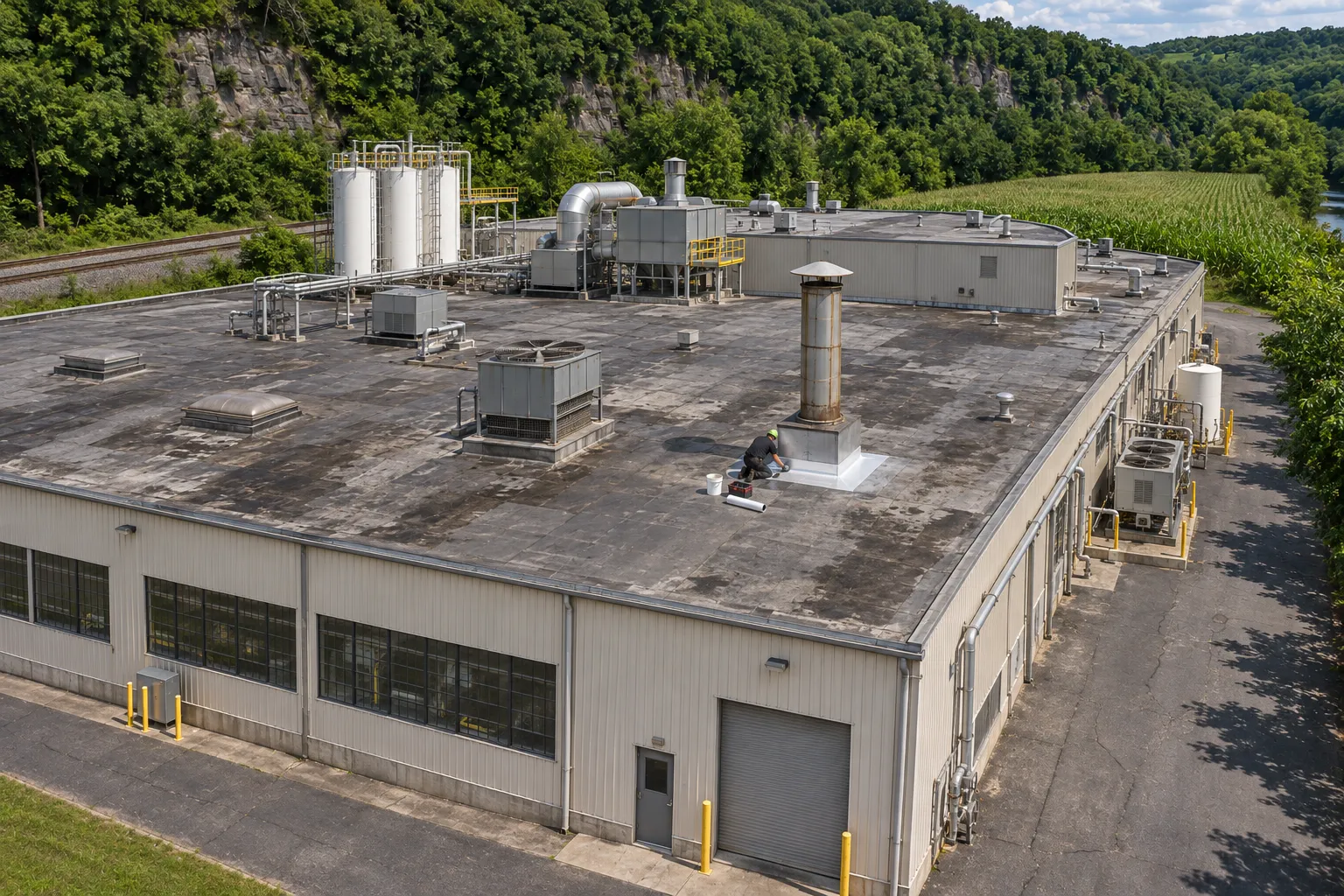
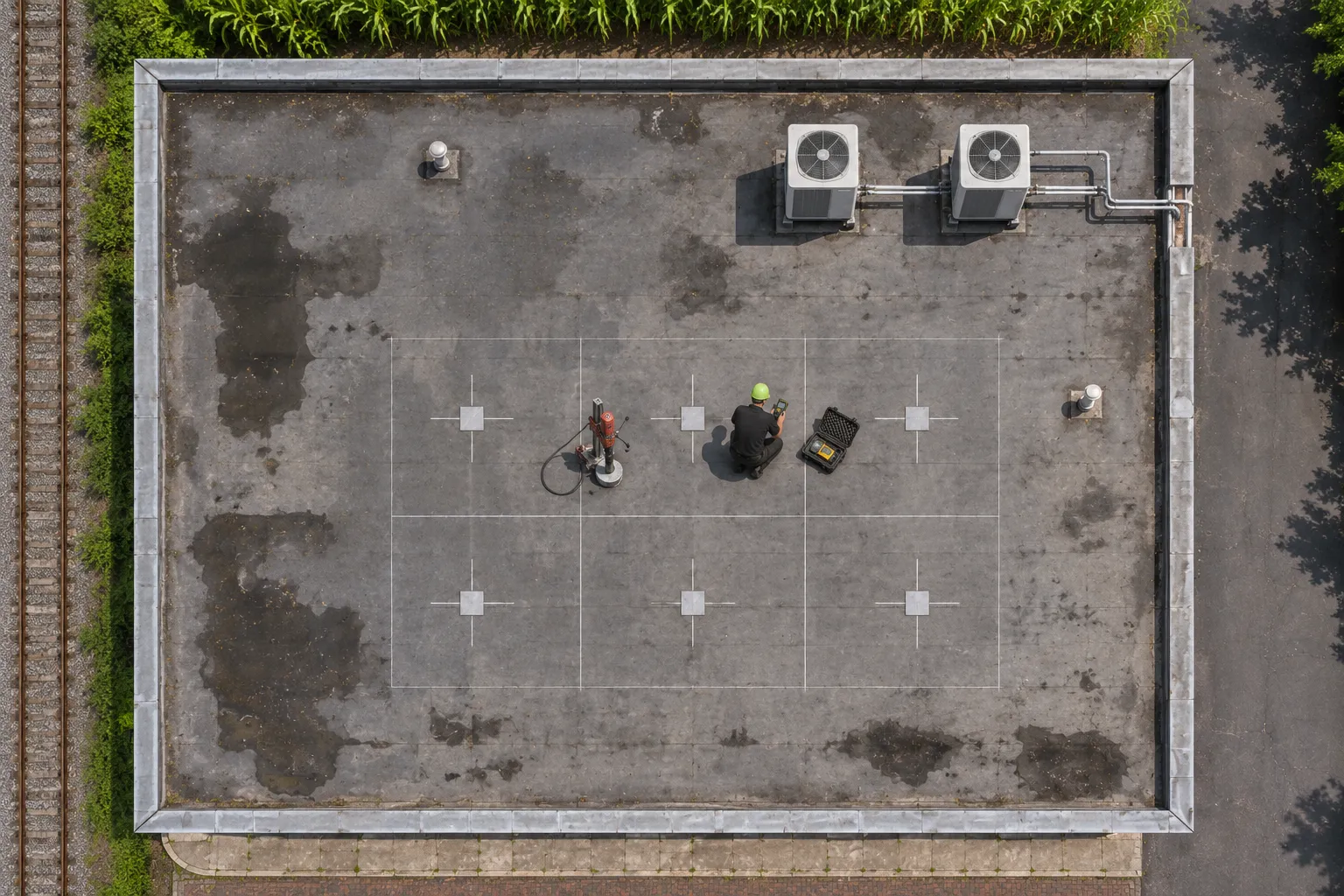
As an Easton industrial roof repair contractor, we repair stack curbs, drains, and worn membrane on plant roofs while protecting the operation underneath.
Easton industrial roof repair moves quickly when the defect is local and the plant can set a work window. These lists show where to start.
Plant roofs carry more equipment and traffic than most, and these six conditions follow from that.
Exhaust stacks and fan curbs vibrate, heat up, and get serviced often. Their flashing cracks at the corners and collars first.
Technicians walking to units scuff, puncture, and crease the membrane along the same routes every month.
Drains sit over production floors where a slow leak can stop a line. The roofing connection, drain body, and pipe all need checking.
Grease, dust, and process vapor collect around exhaust fans and soften or stain the roofing near the discharge.
Supports and sleeves for ducts and pipes loosen as equipment is added or moved, leaving gaps in the flashing.
Condensate lines and small curb leaks soak the insulation around units long before a drip reaches the floor.
Industrial repairs are planned around the operation below as carefully as the roof above.
Repair limits and protection are set before any opening. We coordinate equipment sensitivity, debris, and any shutdown window with the plant.
The roofing connection, drain body, and piping are checked before the repair is set, with plumbing work coordinated so no connection is left open over production.
Curbs get new base and counterflashing sized for heat and movement, with walkway protection added along service routes.
Condensate, process discharge, and fan faults are checked so the roof repair targets only what the findings support.
On a plant roof, a well planned repair protects production as much as the roof itself.
Repairs planned around shifts and equipment let most of the plant keep working while one area is opened and closed. Water stays off controls, conveyors, and product during and after the work.
Flashing sized for heat and vibration holds up longer at the stacks that get serviced most.
Walkway protection along routes to units keeps foot traffic from wearing new holes.
Each repair is logged with photos so plant maintenance can track it over time.
Call us with which line or machine is under the leak. Protect the equipment, then we will plan safe roof access.
Plant roof repairs split between the roof crew and plant staff. Here is how the work lines up.
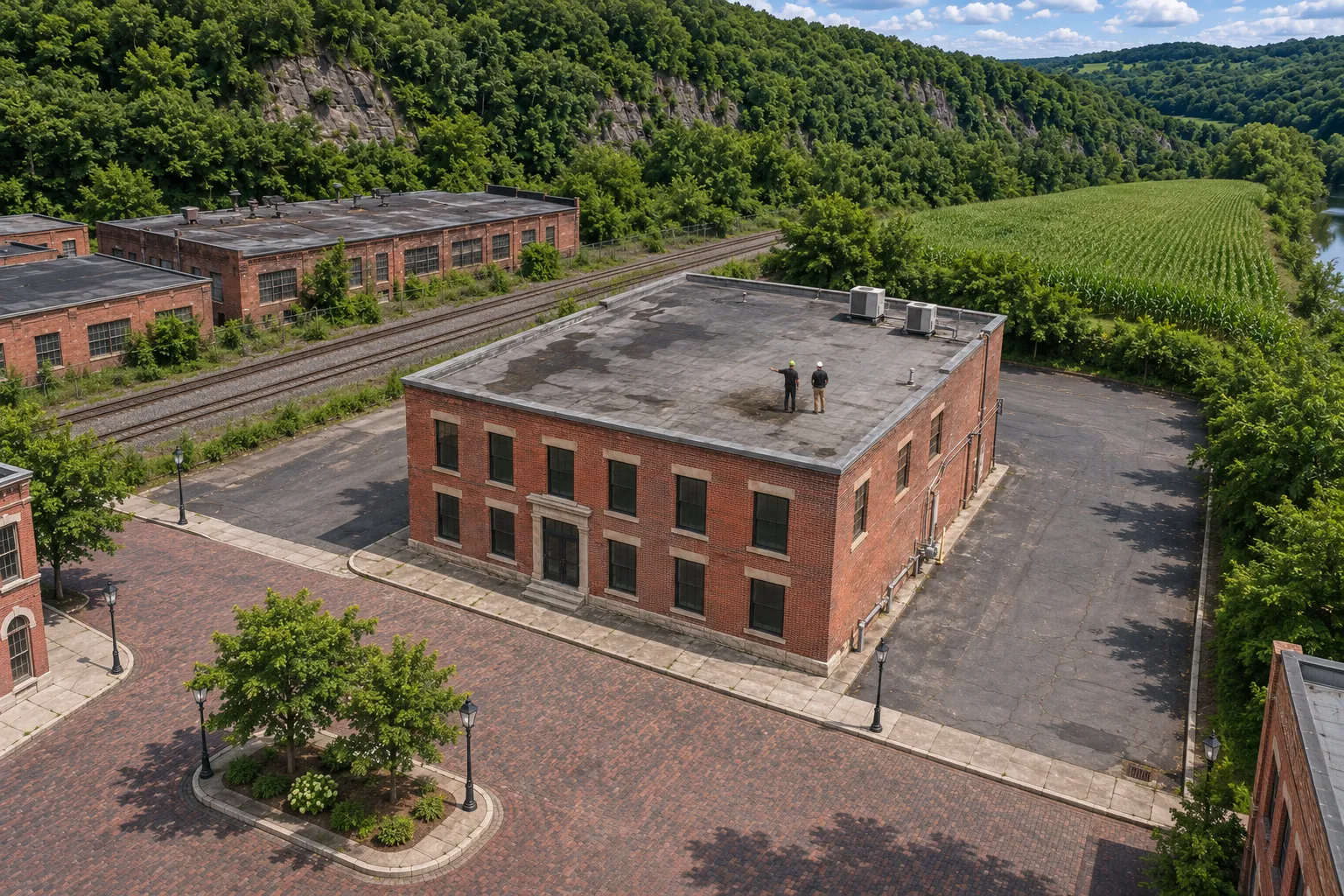
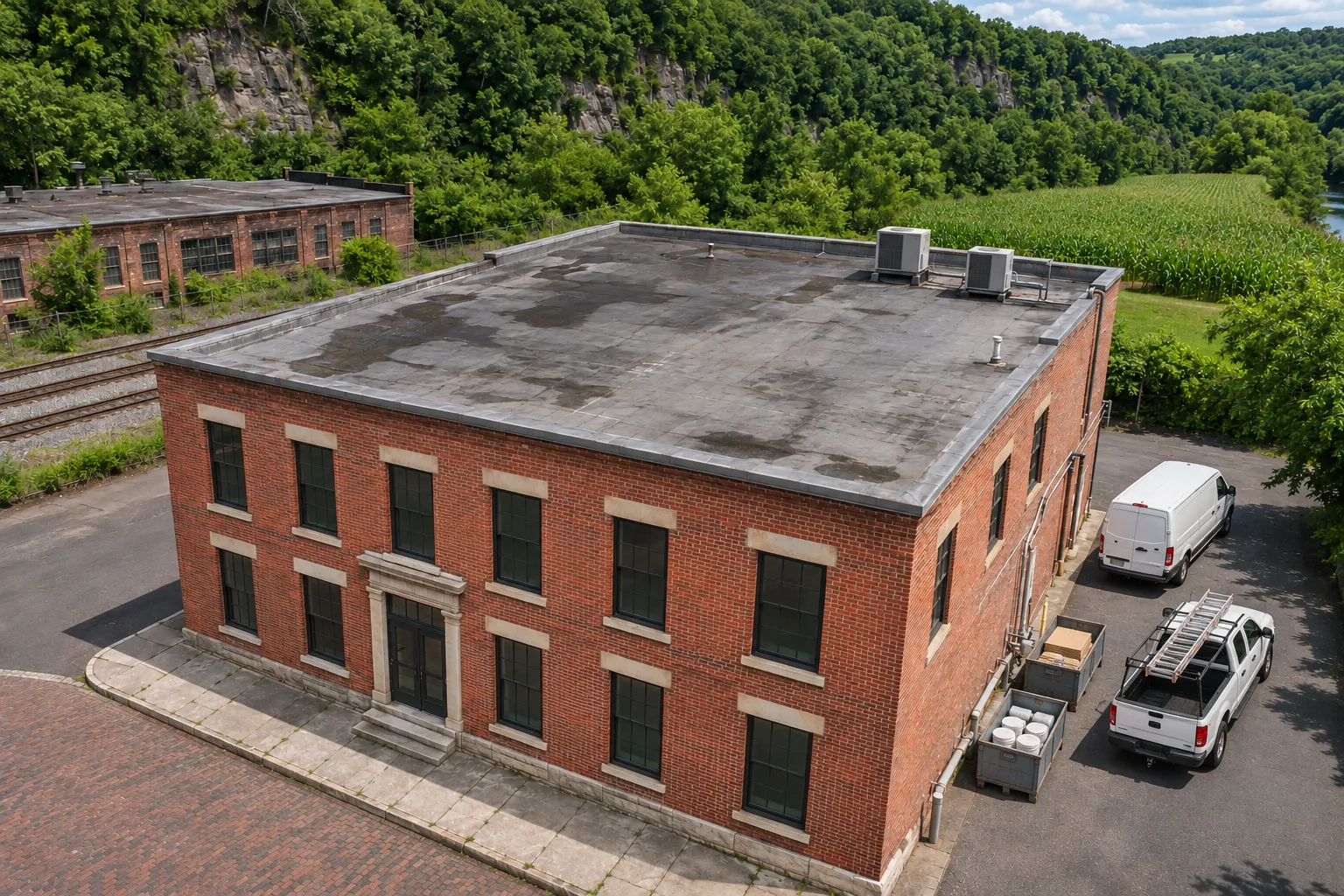
We confirm roof access, lockout needs, and work windows with plant staff before anyone goes up.
Curbs, stacks, drains, and service routes near the reported leak are checked, with equipment sources noted.
Equipment and product under any opening are covered or cleared, and debris control is set.
Flashing, membrane, or drain work is finished and closed the same shift where possible, then checked.
Once equipment is running again, the area is checked for drips from the roof or from the units themselves.
Plant sites often have office wings, metal additions, or leaks with no clear source.
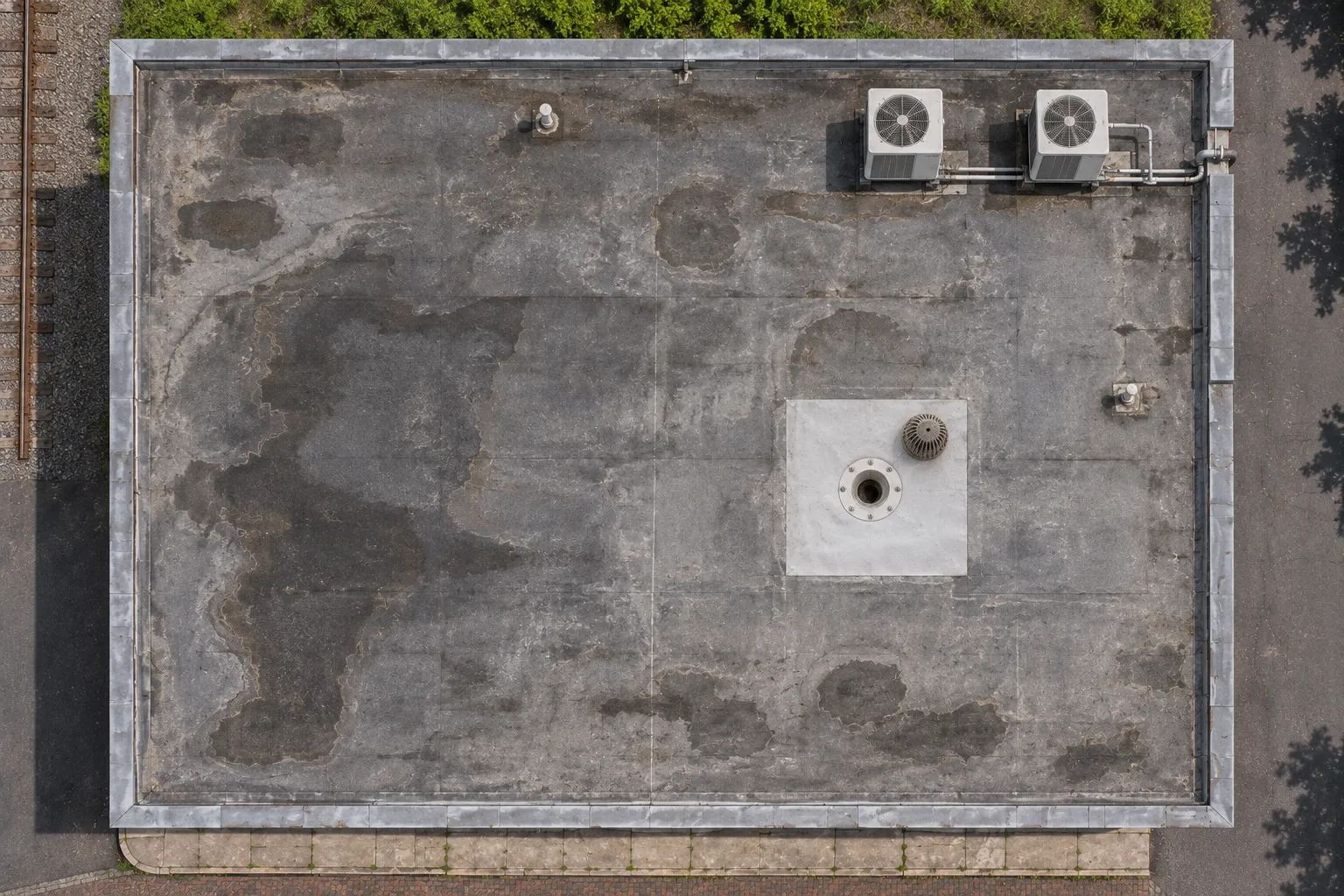
Office and warehouse wings beside the plant where flat membrane seams and drains leak.
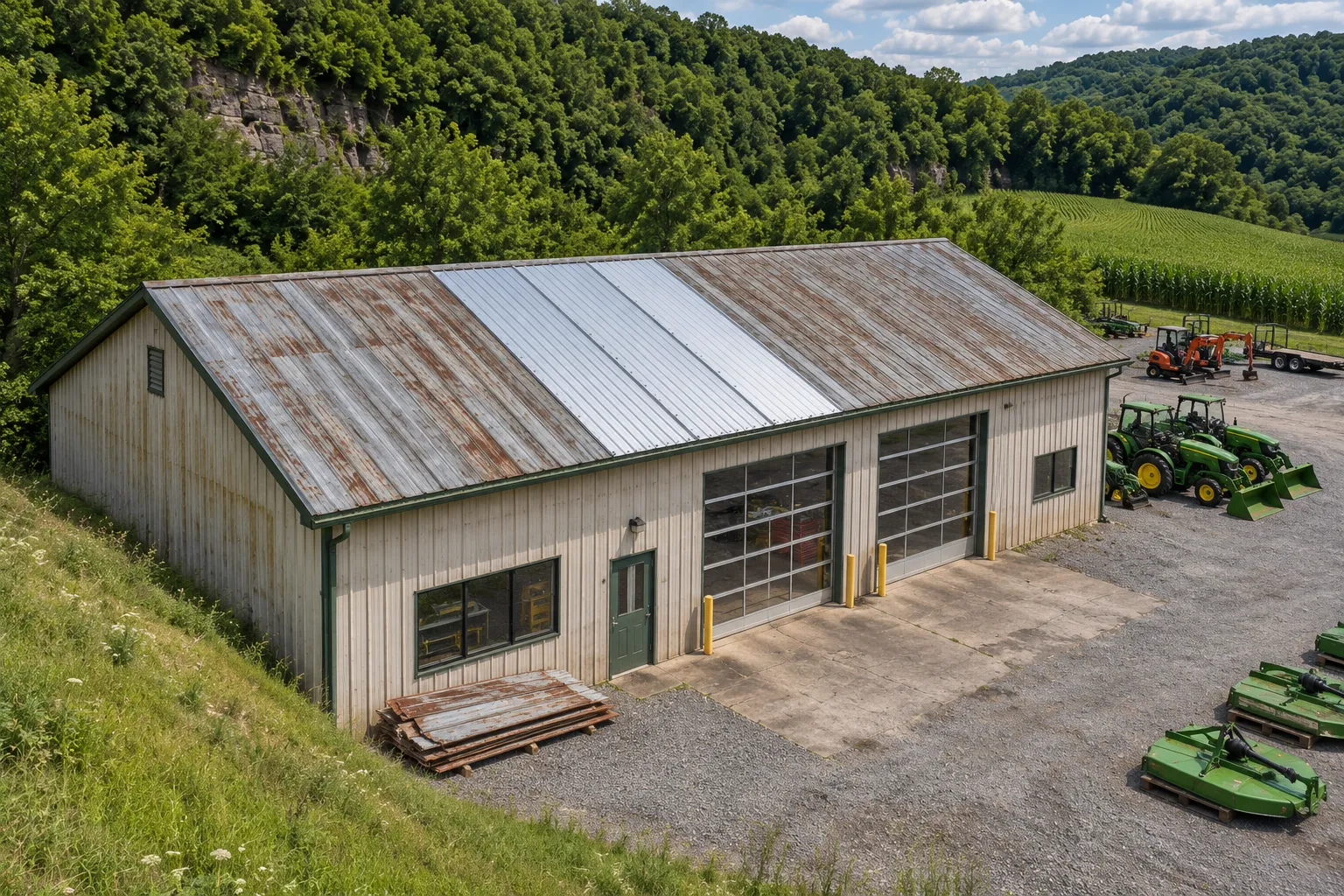
Metal additions and storage sheds on plant property with loose fasteners or split laps.
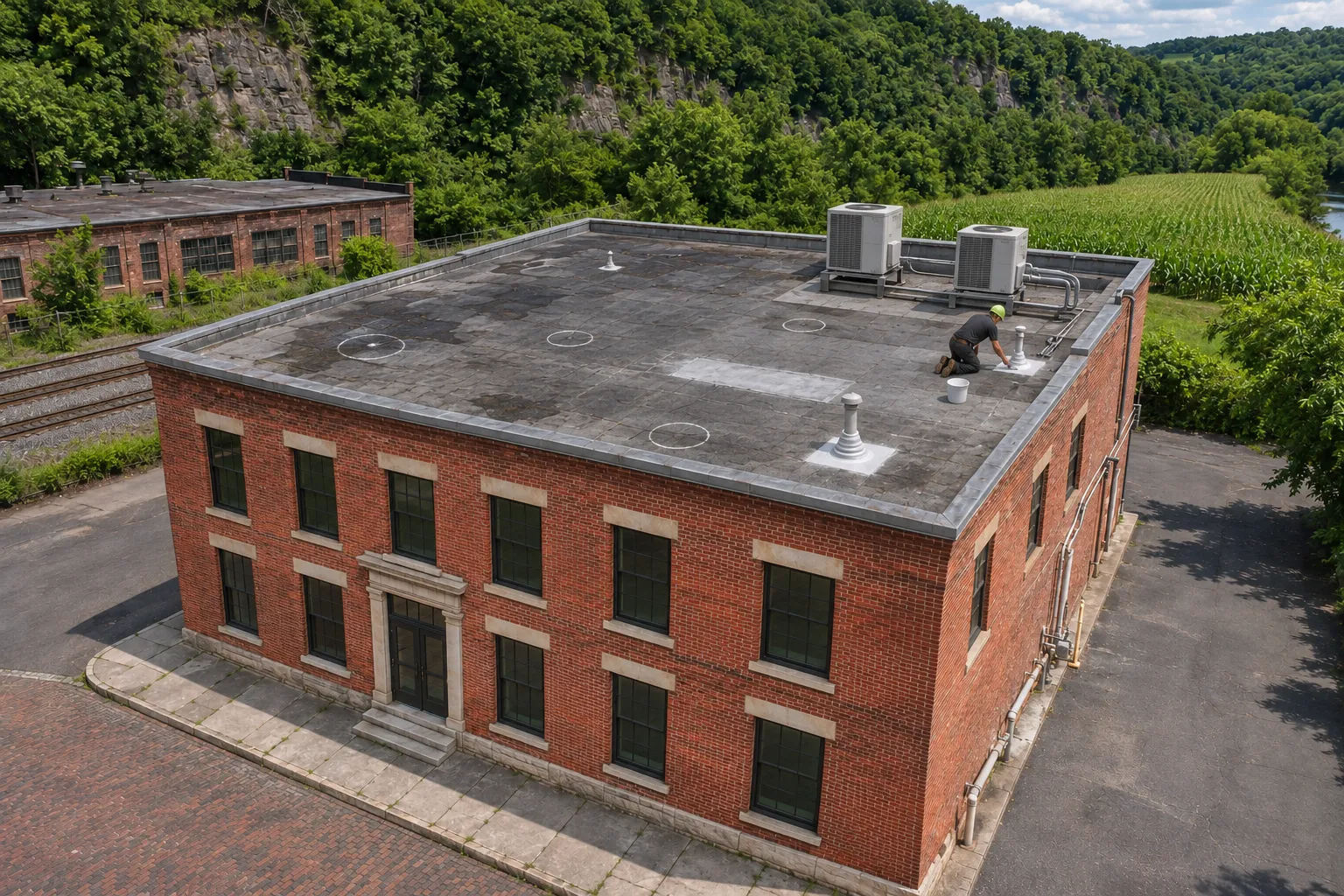
Drips with no clear source that need tracing before anyone opens the roof over equipment.
Answers on working over production, drains, and leaks at plants.
It should connect the roof defect with how far moisture reaches, how the roof is accessed, and what runs underneath. We check equipment penetrations, drainage, and service traffic before choosing materials or opening anything, and list the protection and interruptions the work needs.
Often, when the repair limits and protection are set first. We coordinate equipment sensitivity, debris, and any shutdown windows with the plant. The plan has to keep the opened roof under control, so some activity beneath it may need to pause.
The roofing connection, the drain body, and the piping. We look for wet materials around the outlet and plan access above any equipment. Roofing and plumbing tasks are coordinated so the faulty part is fixed without leaving an open connection over production.
With a coordinated investigation that protects the operation while access is set up. We compare interior signs with curbs, seams, and drainage, then choose testing or openings. Equipment water sources are checked too, so the roof is repaired only where the findings point.
Yes, in the towns on our service area list, from Wilson next door to Morrisville and the Delaware County towns. For a plant elsewhere, call and tell us where it sits and what the roof is doing, and we will say whether we can take the work.
We agree on covers, debris control, and timing with plant staff before the roof is opened. Sensitive equipment under the work area is covered or the area is kept closed until the shift ends, and every opening is sealed before we leave.
Tell us which part of the plant is leaking and when the line can pause. We will plan the inspection and price the repair.