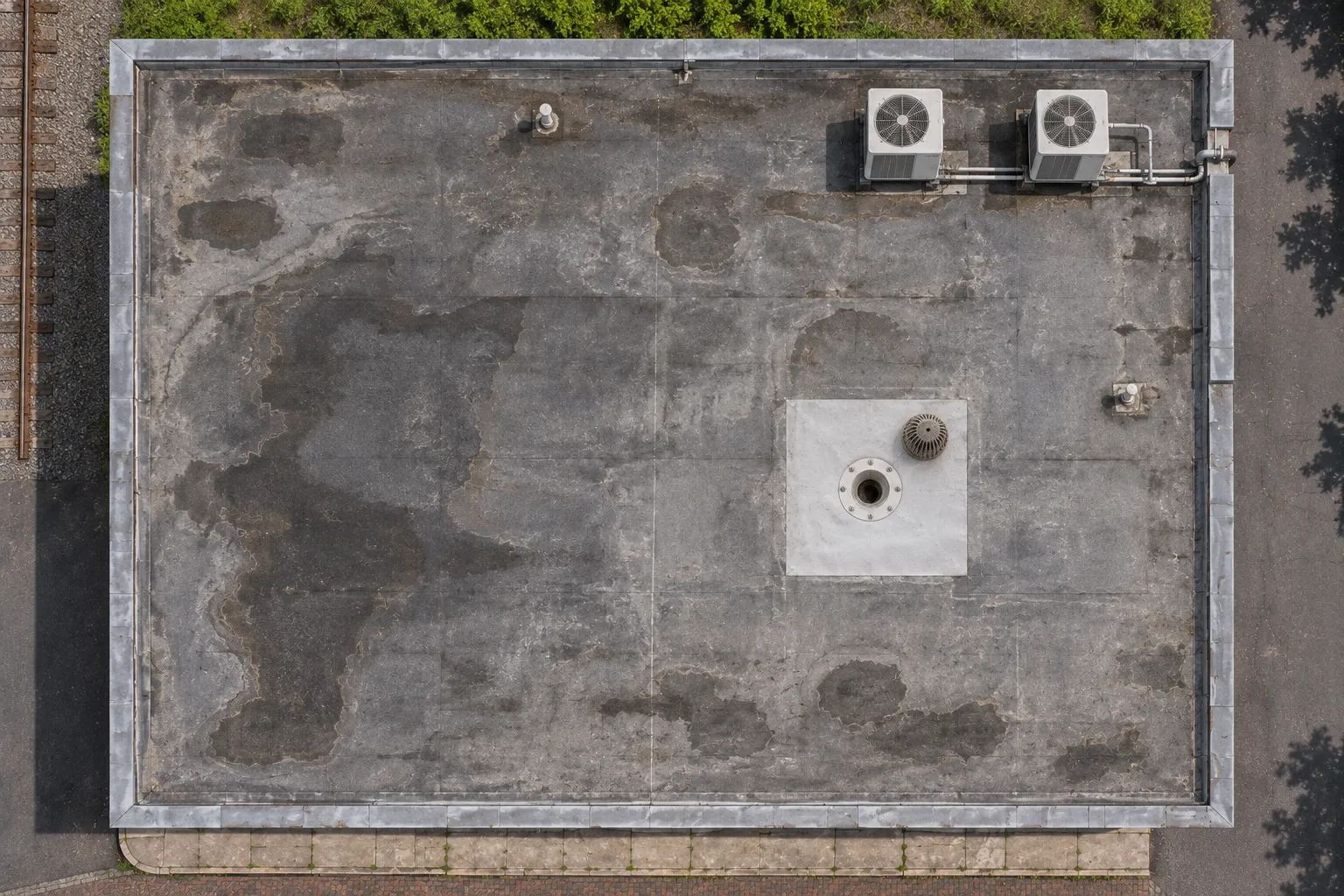
Membrane Roofs
Flat Roof Repair
Low-slope single-ply, modified, and built-up roofs on warehouses, halls, and offices, with seam, drain, blister, and wet insulation repairs sized from core cuts.

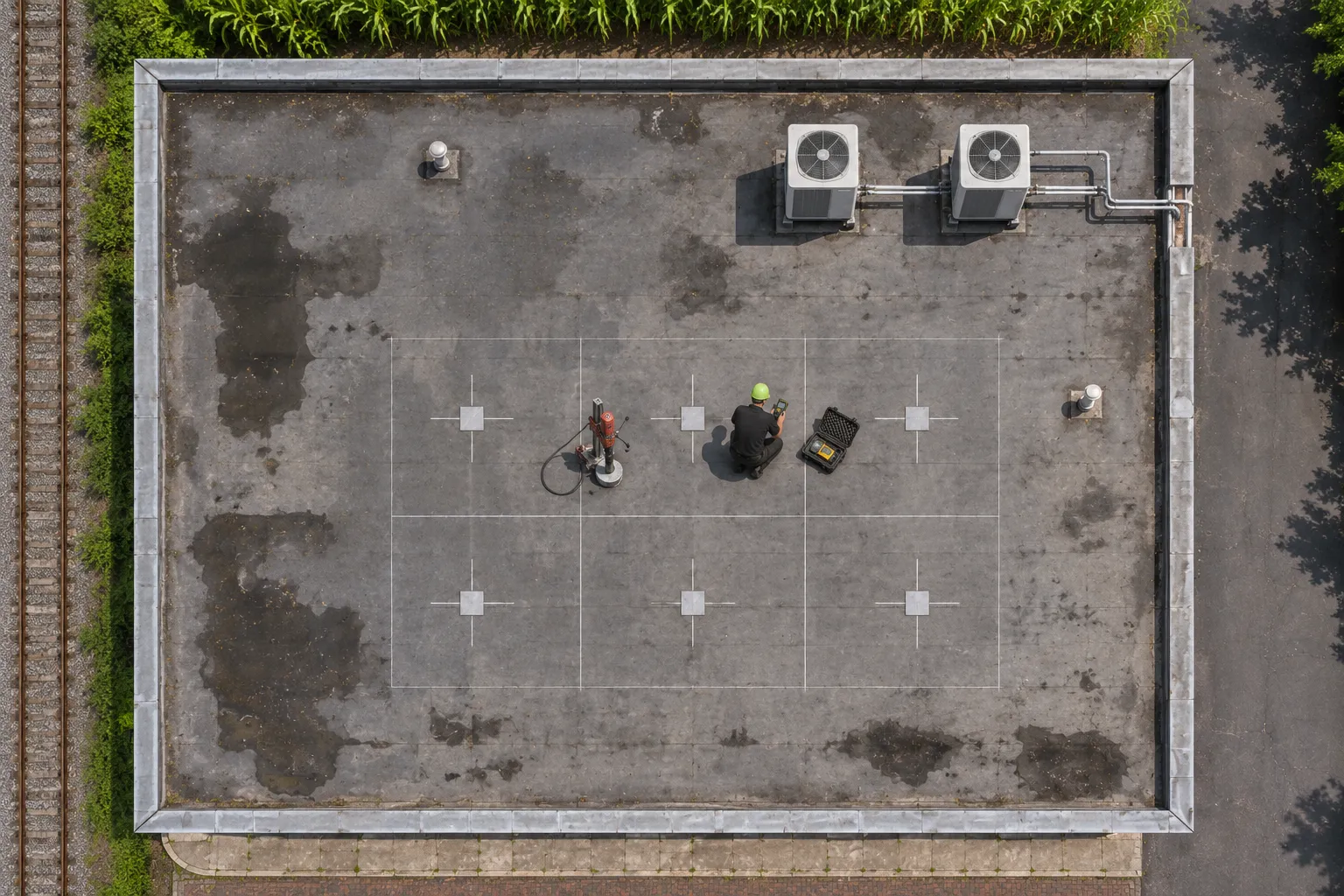
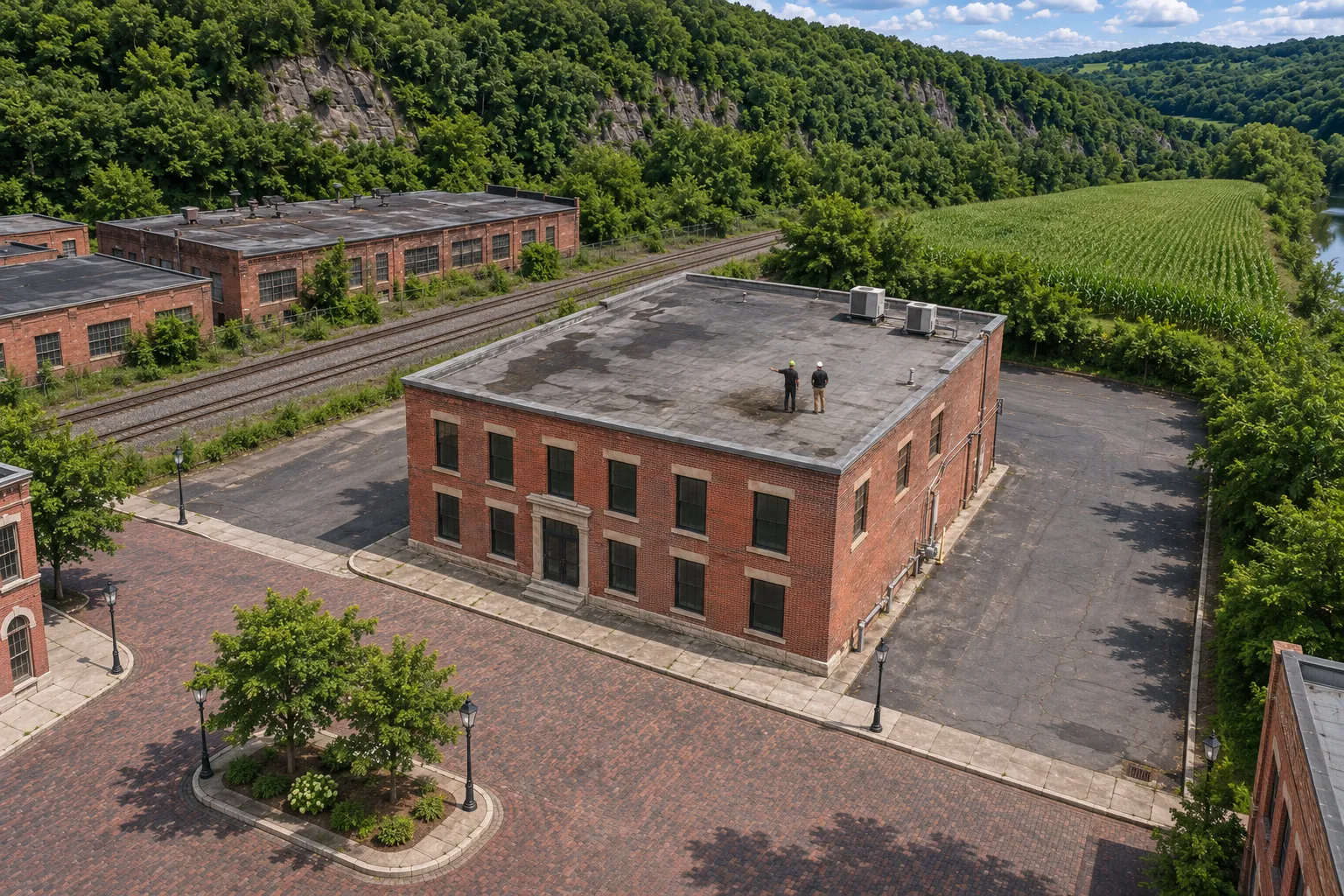
Our commercial roof repair services in Easton cover flat membranes, metal panels, hidden leaks, and plant roofs, each started with an on-roof inspection.
Our commercial roof repair services in Easton split by roof type and by how hard the leak is to find. Pick the row closest to your building.
Low-slope single-ply, modified, and built-up roofs on warehouses, halls, and offices, with seam, drain, blister, and wet insulation repairs sized from core cuts.
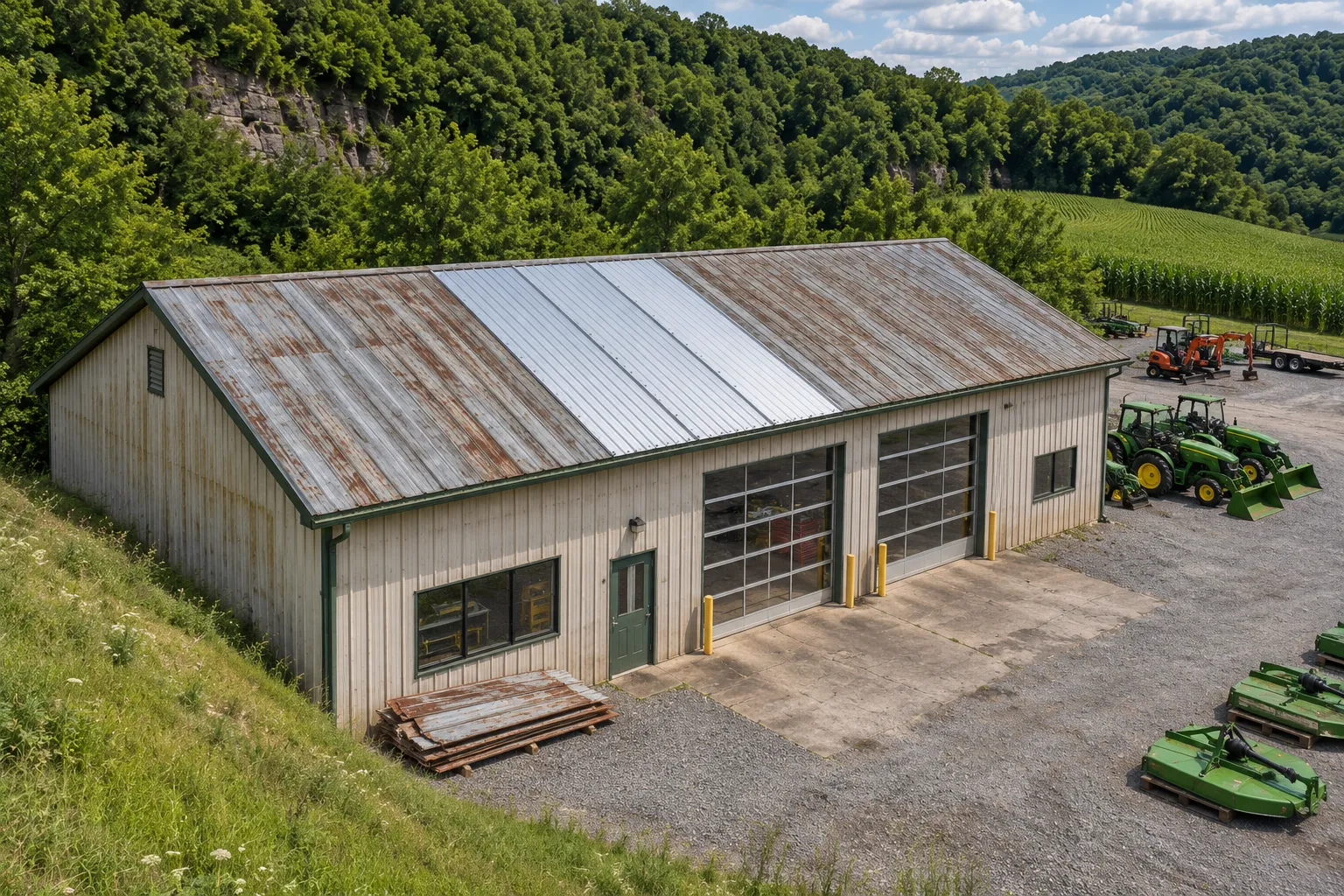
Ribbed and standing-seam roofs on shops and storage buildings, with fastener, lap, panel, and penetration flashing repairs made at the joint that failed.
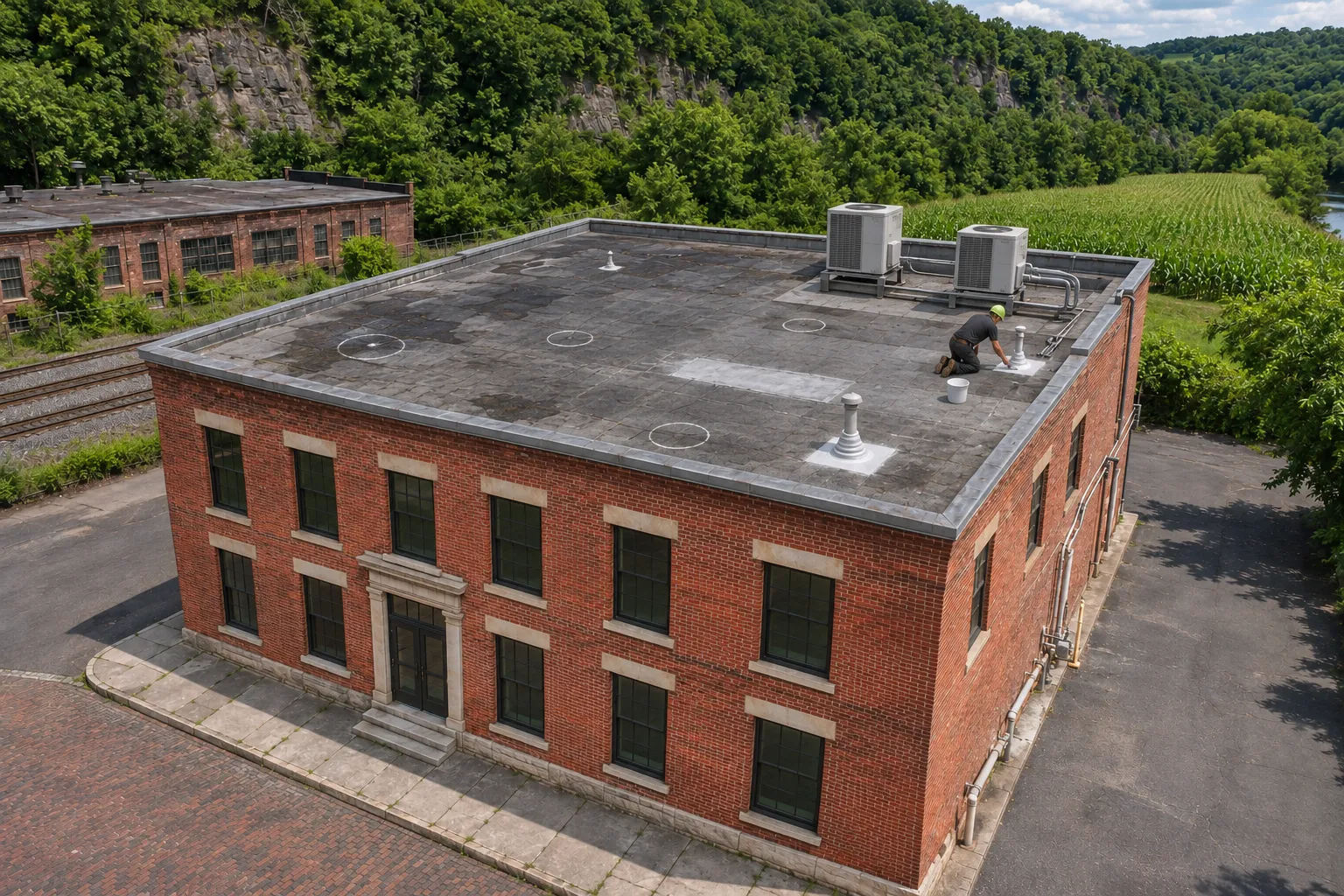
Leaks that show inside with no obvious opening, including snowmelt, parapet, ice, and heavy-rain leaks, traced before anything is replaced.
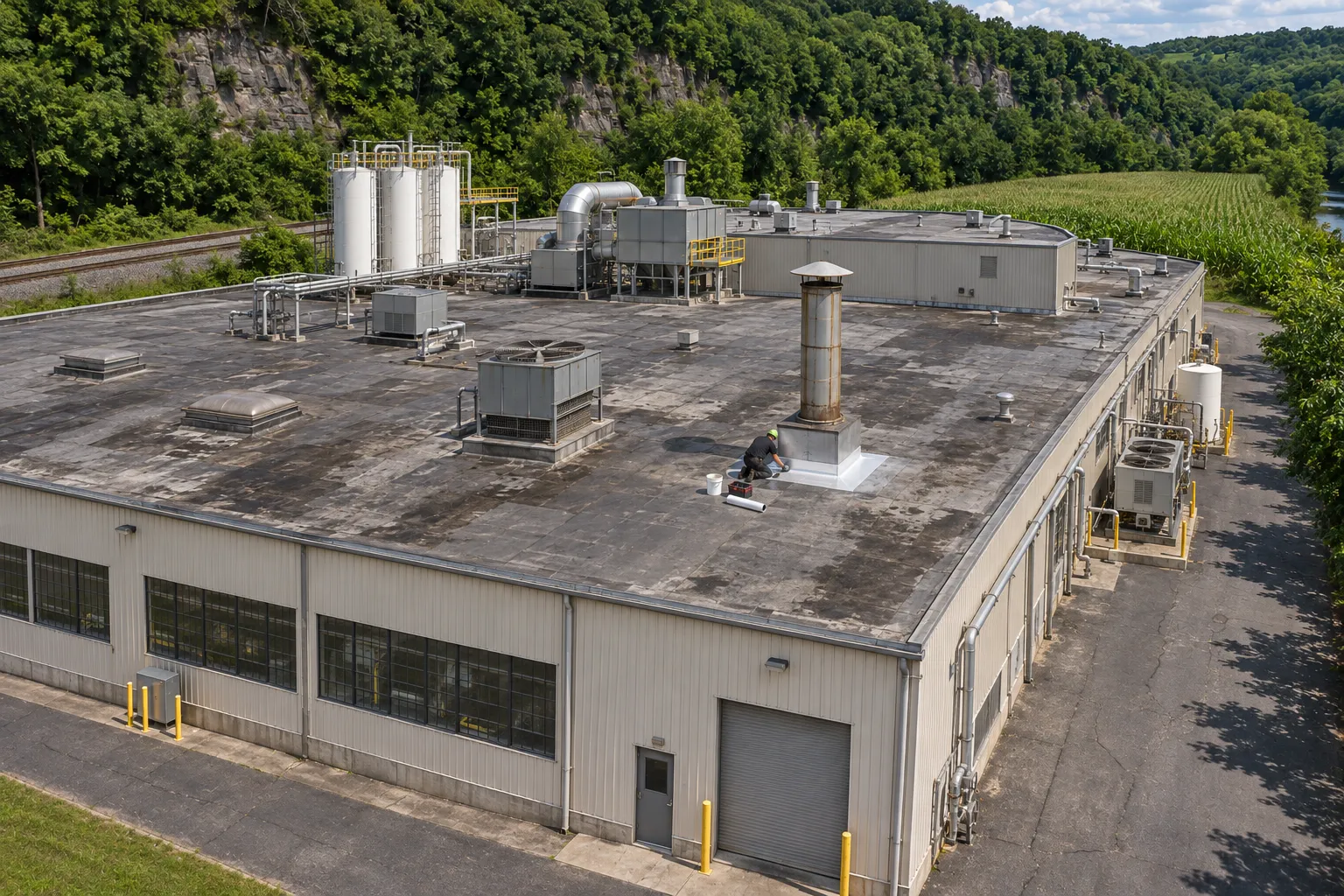
Plant roofs with stacks, fans, ducts, and drains over production, where repairs are planned with the operation below.
Most buildings fall clearly under one service. These lists help when the roof type or the leak is less obvious.
Book an inspection and we will sort out which service fits once we have seen the roof and the leak.
Whichever service applies, the first visit follows the same order on the roof and in the building, so every price rests on the same set of checks.
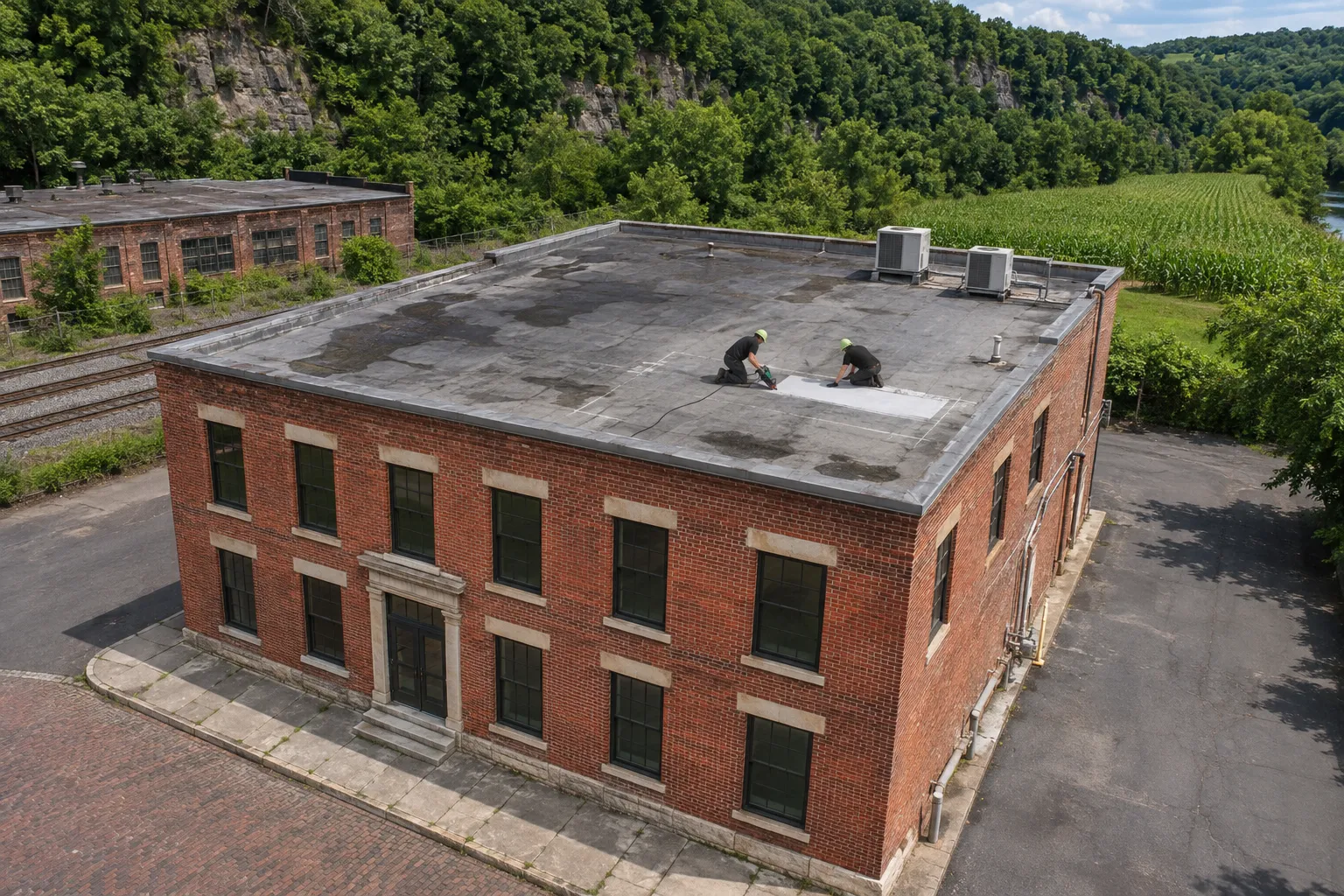
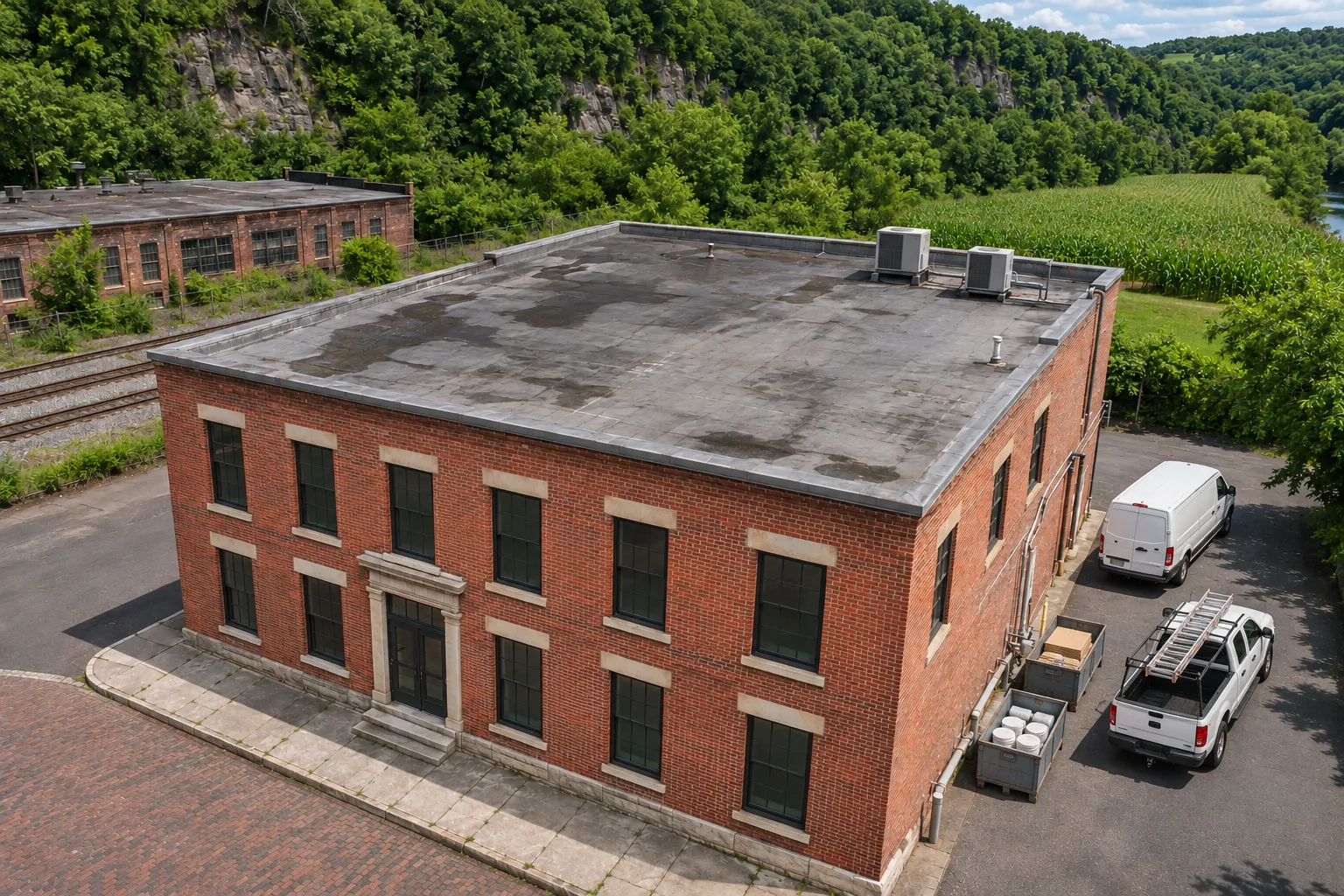
We ask where water shows, when it started, and what roof or equipment work happened recently.
Membrane type, panel profile, and older repairs are noted, since they set which materials and details fit.
Probing, cores, and tracing show how far the damage reaches past what you can see.
You get photos, a marked plan, and a price based on what the roof showed, with access and protection included.
These signs from inside and on the roof usually mean one of our repair services is needed soon.
New rings on tile or drywall show water is reaching the inside, even if the drip stopped. Mark the spot and the date so the trace can start from it.
Standing water long after rain points to a drain or slope problem near the outlet. Clearing the strainer is a fair first step; the drain flashing comes next.
Lifted lap edges let dirt and water under the membrane with every storm. Rebuilding the run before winter keeps freeze-thaw from widening the gap.
Rust stains spreading from screw heads mean the washer seal has failed. Oversized screws with new washers usually close those holes.
Split flashing at a curb corner often drips into the room below the unit. Rebuilt corners with new counterflashing fix it at the source.
A musty smell near the roof can mean wet insulation long before a stain shows. Core cuts near the smell show whether the boards are holding water.
Answers on condensation, records, and occupied buildings.
Yes. Condensation on cold surfaces can look just like a roof leak in an old brick building. We compare when it drips with rainfall and building activity, then check insulation, deck undersides, and wall transitions so the repair targets a confirmed source.
Repair locations, weather events, and any equipment work done since. We compare them with photos and any new interior moisture to see what changed, since a new puncture or disturbed flashing can be separate from the defect the first repair fixed.
We plan around occupied rooms, entrances, and any opening in the roof. Staging, debris, and temporary protection are agreed before the work order is set. Some activities can need moving or separating from the work, even when the defect looks small from outside.
Yes. Every service starts on the roof with the same checks: roof system, leak route, and damage edge. The findings then decide which service the repair falls under and what the price includes.
Often it does. A plant can have a leaking stack curb, a metal addition with loose screws, and a flat office wing in one visit. We inspect each and price them separately so you can schedule them together or apart.
We focus on repairs. When the inspection shows damage across most of the roof, we tell you so and explain which sections still serve, so you can plan replacement with the facts in hand.
Roof access details, the locations of any leaks inside, and dates when they appeared. Earlier repair notes, photos, and the name of anyone who serviced rooftop equipment recently help us start in the right place and keep the visit short.
Temporary work slows water entry until conditions allow a full repair, for example during ice or on a wet surface. It comes with a written follow-up scope. A permanent repair removes the damaged material and ties into solid roofing.
Tell us what the roof is doing and what kind it is. We will inspect it and point you to the right repair.