Open Lap Seams
Seam edges lose their bond near walls, curbs, and corners where the membrane works hardest. We clean back to well bonded material and rebuild the full run that let go.

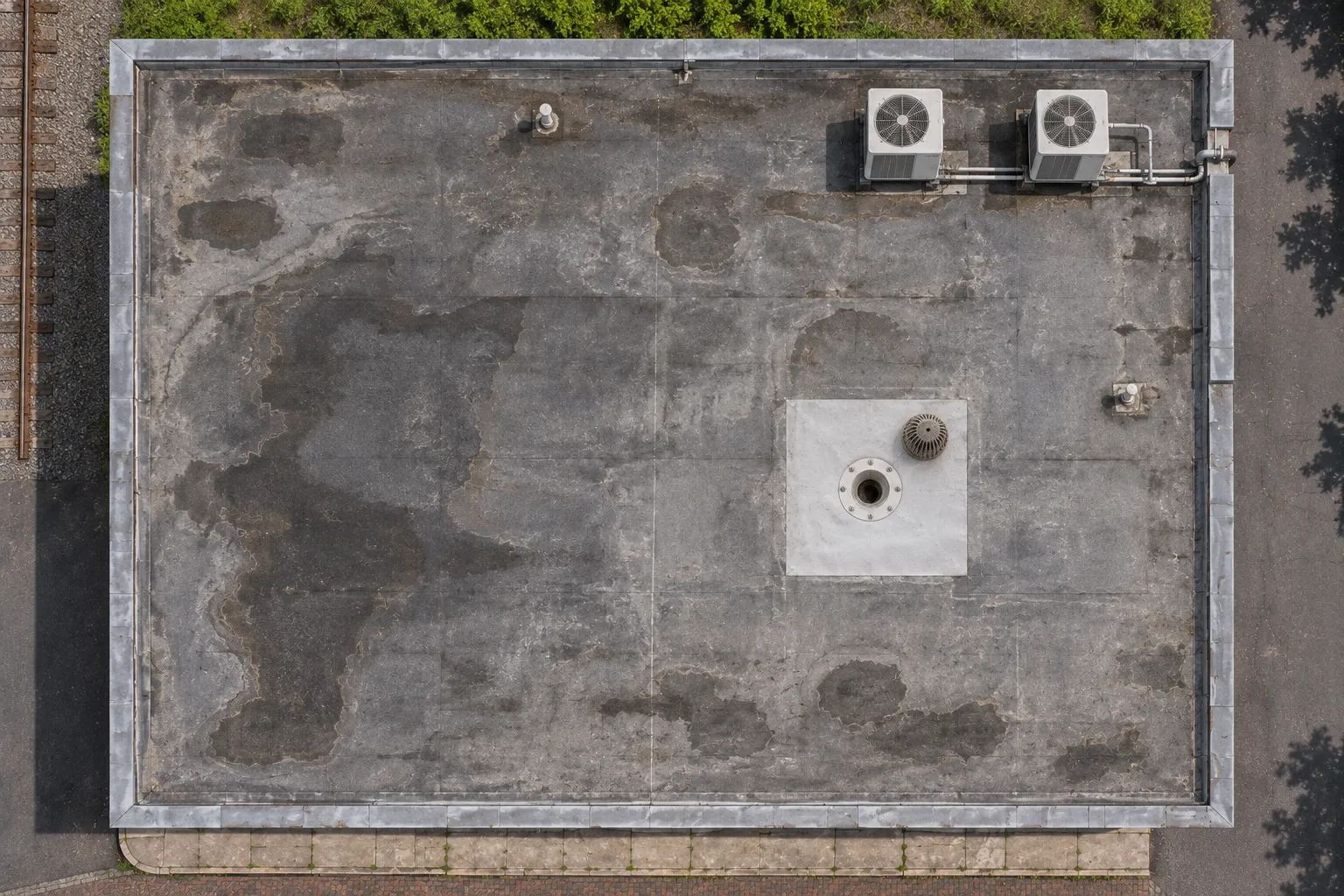
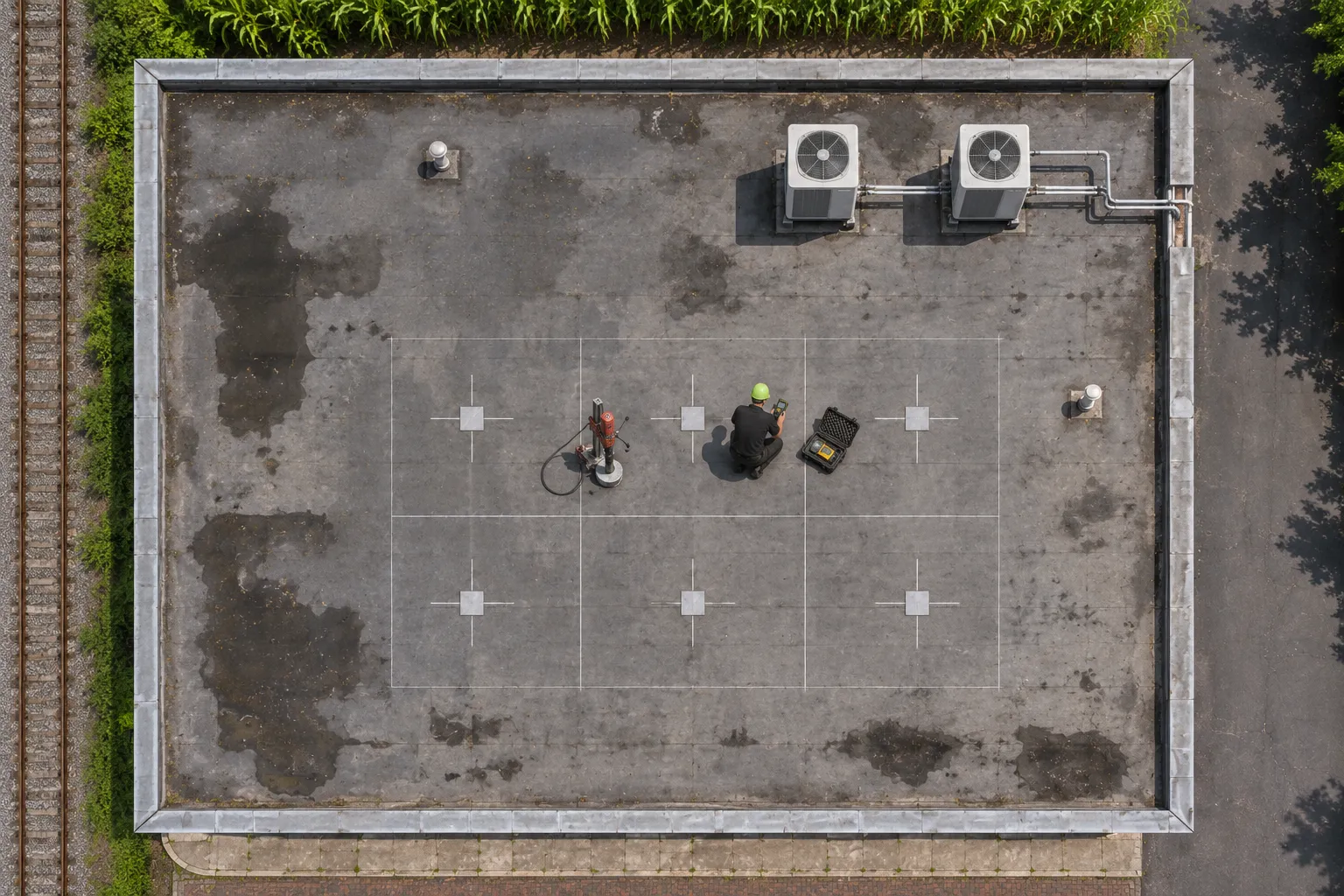
As an Easton flat roof repair contractor, we repair seams, drains, blisters, and damaged membrane on low-slope commercial roofs after checking the insulation below.
An Easton flat roof repair goes fastest when the damage is local and the boards around it are dry. Use the two lists to see where your roof sits.
These six conditions send water into flat-roofed buildings most often, each tied to the repair it needs.
Seam edges lose their bond near walls, curbs, and corners where the membrane works hardest. We clean back to well bonded material and rebuild the full run that let go.
Loose clamping rings and cracked flashing at the drain bowl let water drop straight into the deck, even when the drain itself flows freely after a storm.
Trapped moisture or weak adhesion lifts blisters in built-up and modified roofs. Their size, splitting, and traffic exposure decide whether one gets opened or watched.
Blocked outlets and low spots raise water against seams and flashing that only see a film on lighter days. That is when weak details give way.
Soft spots underfoot and dark cores mean the boards hold water. They come out before new membrane goes down, or the moisture stays locked in.
Wind and seasonal movement open the joints in edge metal and lift membrane at the perimeter. New flashing ties those joints back into the field membrane.
The membrane type sets the repair, since the wrong material or adhesive can fail even when a patch looks tight.
TPO, PVC, EPDM, modified bitumen, and built-up roofs each take different materials. We confirm the system and check older patches before choosing how to prepare the surface.
Core cuts and probing show how far wet boards and loose membrane reach. That edge sets the repair size and often runs past the visible hole.
Stable blisters with dry plies below are recorded and watched. Split or trafficked ones are cut, dried, and covered with a patch matched to the roof.
At drains we reset the clamping ring and flashing and, where the area sits low, build up the insulation so water reaches the outlet.
Done to the edge of the damage, a flat roof repair protects the things owners care about most.
Replacing only the wet boards keeps the dry insulation across the rest of the roof working through the winter. It also slows rust on the steel deck flutes, which starts when wet boards sit on them for months.
Sealing seams and drains where water enters keeps it off pallets, product, and machinery under the roof.
A solid repair on an older roof buys time to budget a replacement on your own schedule.
Each repair gets photos and a marked plan you can hand to a tenant, buyer, or insurer.
Call us before the next storm adds more water at the outlet. Tell us where the drain sits and what shows inside below it.
Flat roof work moves between the roof and the space below it. Here is the order we follow.
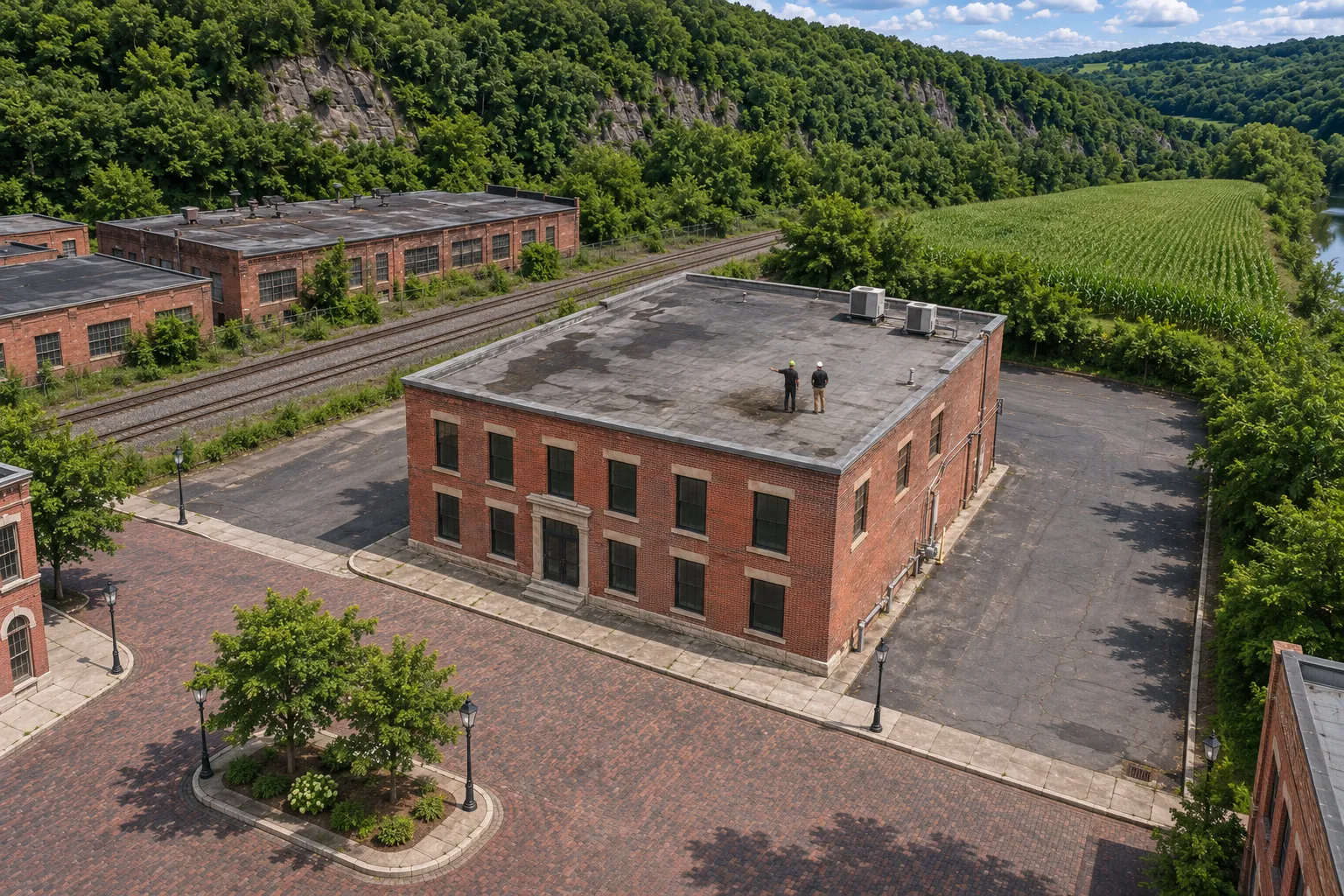
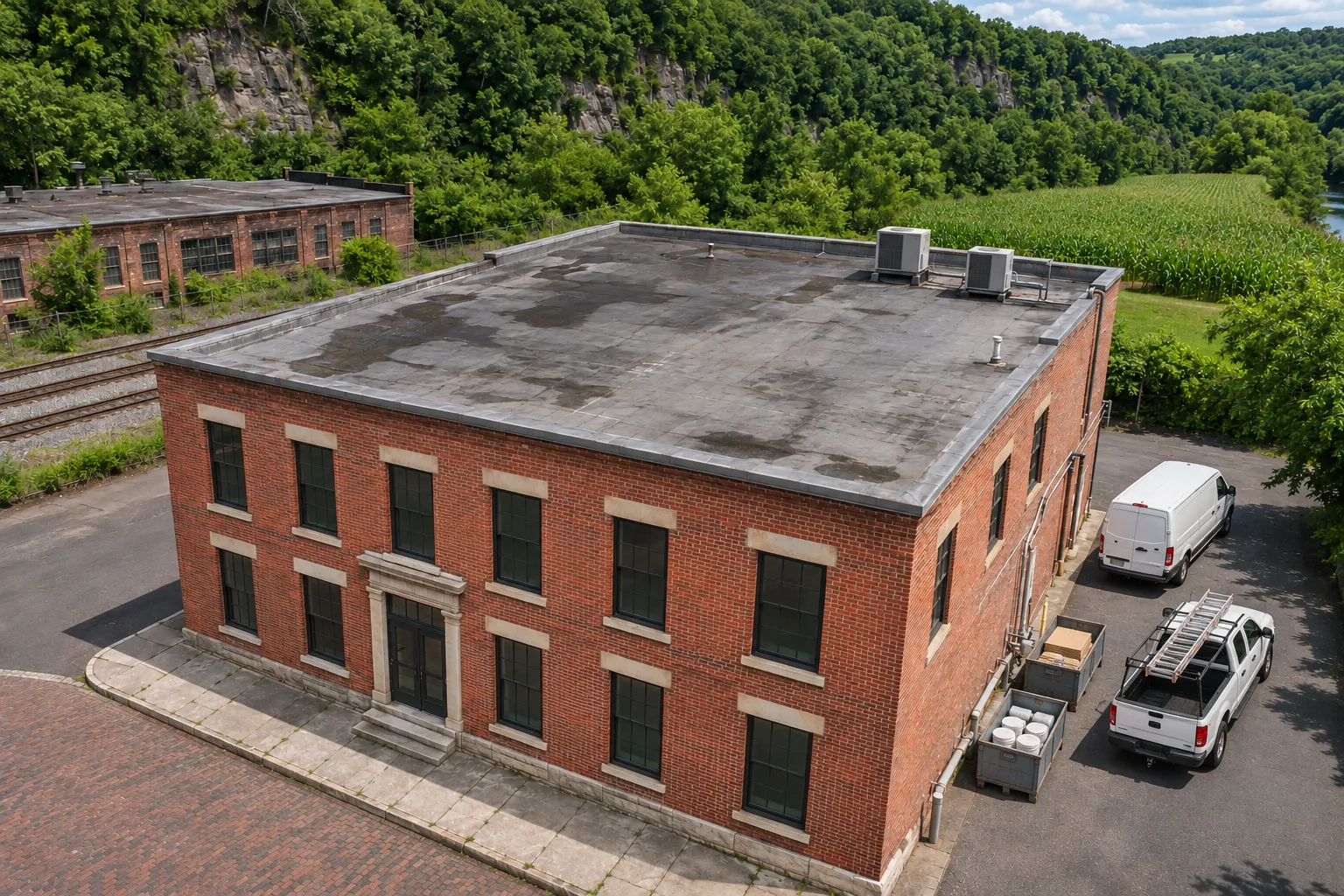
We record each stain or drip location, the weather when it appeared, and what sits underneath that needs covering.
Seams near the reported area are probed, and every drain is checked for loose rings, cracked flashing, and debris.
Core cuts show where the insulation is wet, and the edge is marked on a roof plan so you can see the repair size.
New boards and membrane go in, seams are welded or adhered to match, and drain flashing is reset before the area returns to service.
Flat roof problems often sit beside metal, leak, or plant roof issues on the same property.
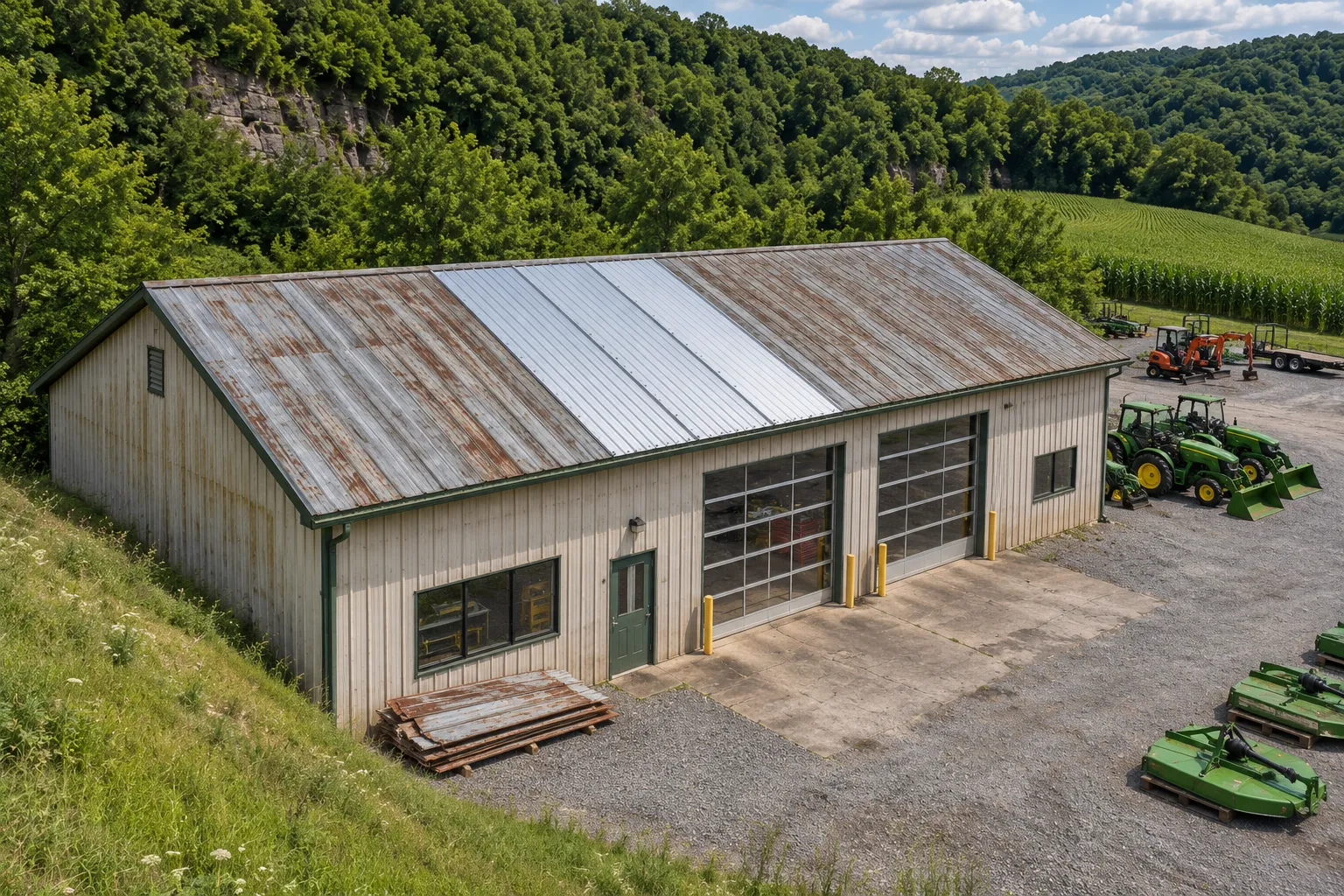
Shop additions and storage buildings with metal panels whose laps and fasteners leak beside the flat section.
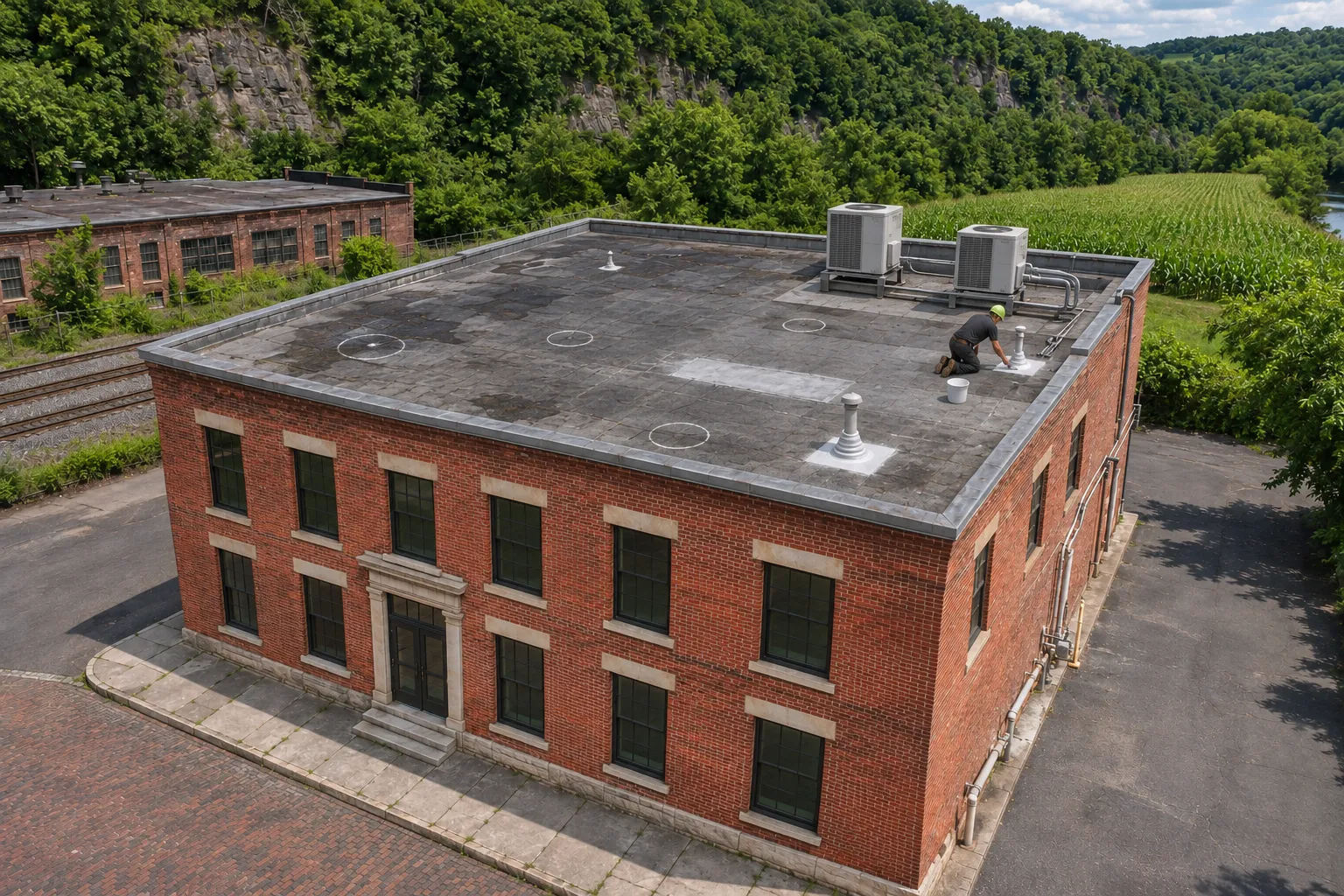
Drips that keep appearing inside after the flat roof looks sealed, often from walls or curbs.
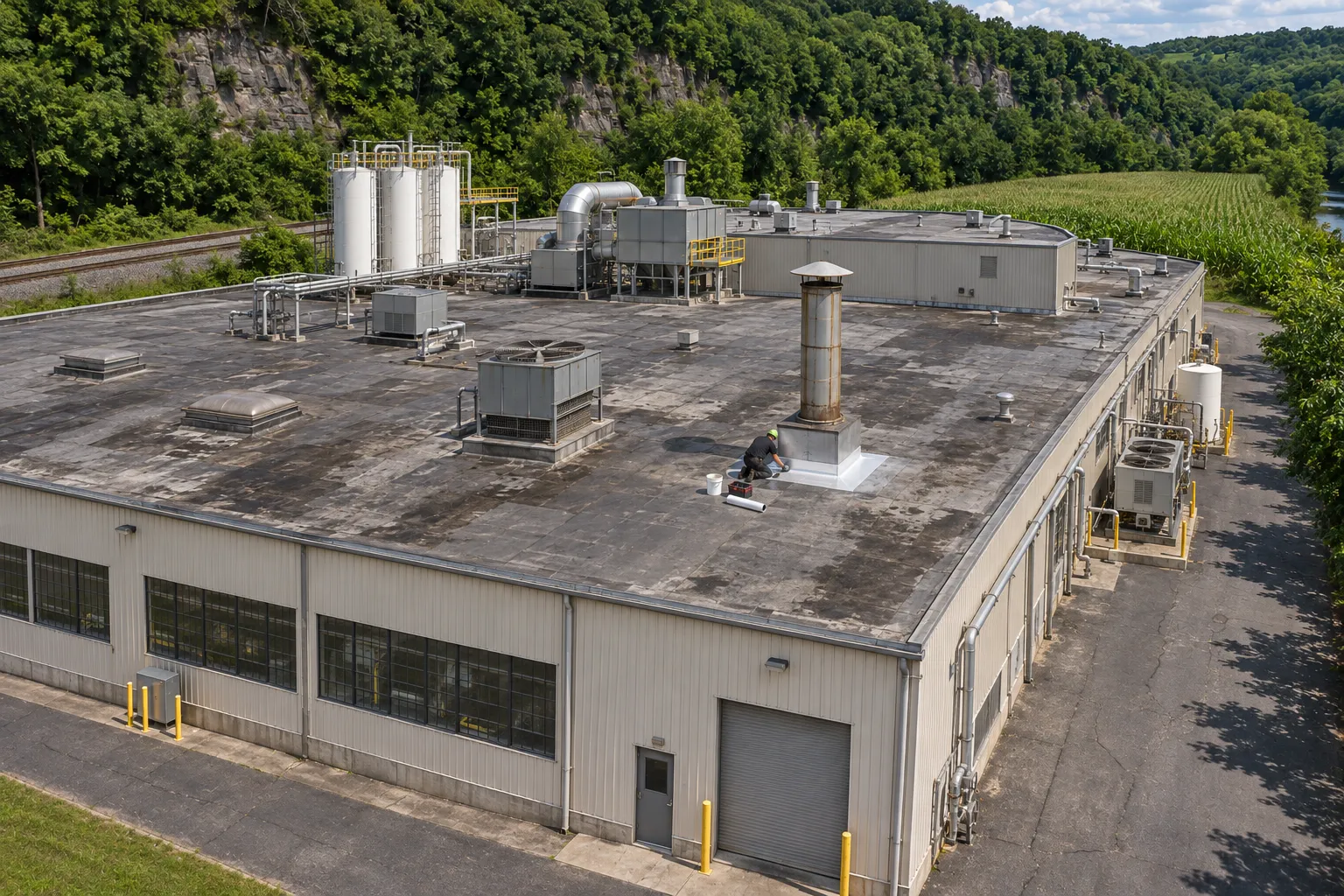
Process buildings where stacks and fans crowd the flat roof and service traffic wears it down.
Answers on methods, blisters, winter work, and heavy rain for flat commercial roofs.
Use materials and details that match the existing roof system and the failure found. We check the membrane around the damage and the moisture below it, then tie the repair into reliable roofing. Covering an opening while wet boards or loose plies sit beside it lets the damage keep spreading.
No. A blister that is intact, dry, and away from foot traffic is often recorded and watched. One that is split, growing, or walked on gets opened and repaired. We have the repair materials ready before any cut, since opening a stable blister without a plan creates a new path for water.
Sometimes, and sometimes only a temporary repair is possible. Ice, wet surfaces, and the cold limits of each adhesive or sealant decide what can be done. When conditions block a permanent repair, the temporary work comes with a written follow-up scope for warmer, drier weather.
Heavy rain raises water levels against seams and flashing when drains are blocked or runoff is slowed. Details that shed a light shower get pushed under. We inspect drains, low spots, and obstructions with the seams, and match the roof water path to where the leak showed inside.
A single seam or drain repair is often finished within a day once the area is dry and accessible. Jobs that replace wet insulation take longer, since boards come out in sections and each section is closed before the crew leaves. Weather and access set the schedule more than roof size.
Tell us where the flat roof is leaking and how the space below is used. We will inspect it and price the repair.