Coping and Masonry Above the Roof
Open coping joints and porous brick let water behind the wall flashing. It runs down inside the wall and shows below the roof line.

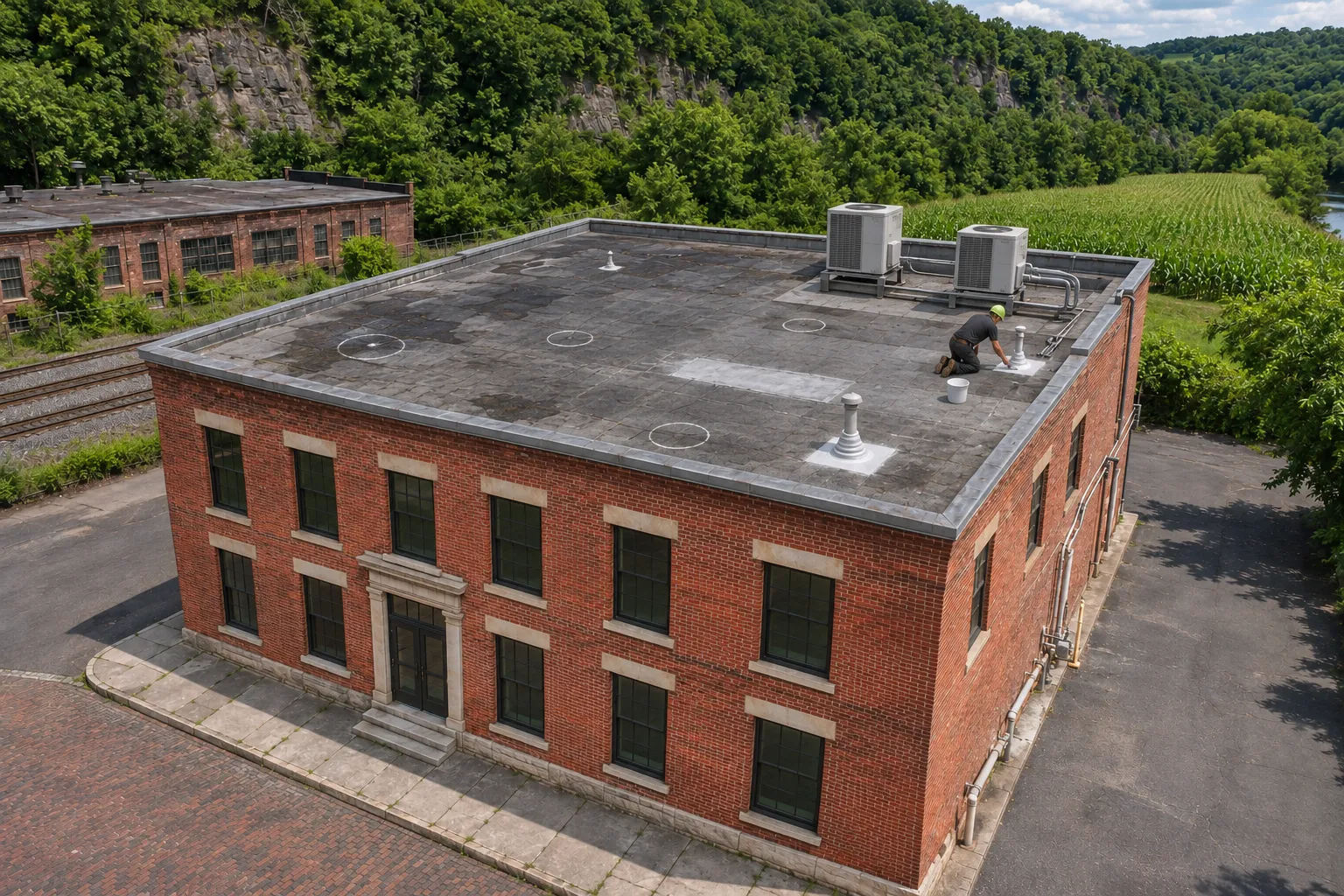
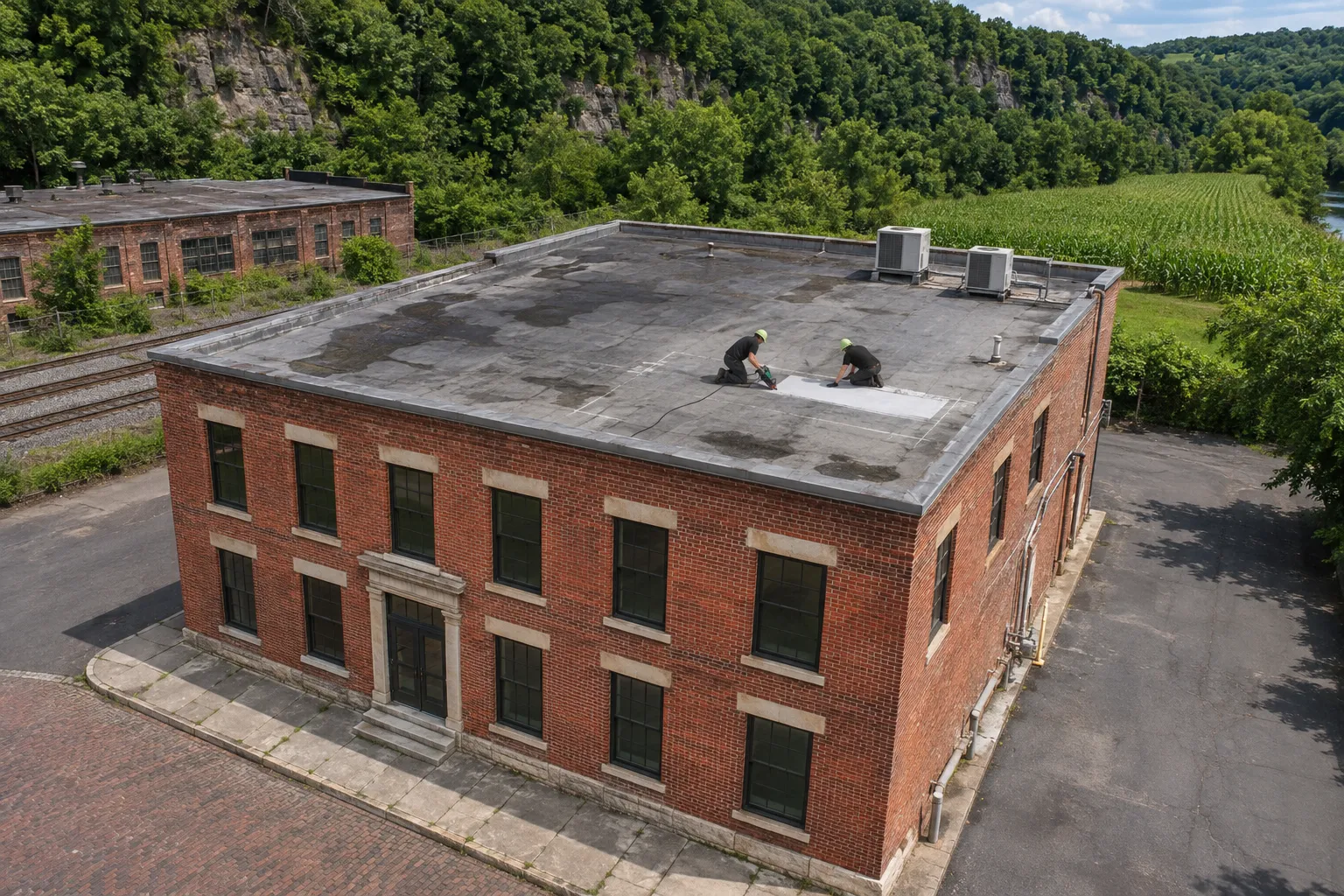
As an Easton commercial roof leak repair contractor, we trace drips back to the seam, wall, or flashing that admits water, then repair that entry point.
Easton commercial roof leak repair starts faster when the leak follows weather. Some drips need another source ruled out first.
Six entry points account for most of the leaks we trace on Easton commercial buildings.
Open coping joints and porous brick let water behind the wall flashing. It runs down inside the wall and shows below the roof line.
Meltwater collects at blocked drains and transitions, then travels between roof layers before it drips, often hours after the thaw starts.
Ice at the eaves holds meltwater against edge joints and seams that normally shed it. Heat loss from the building can feed that ice.
In heavy rain, slow drains let water rise over seams and flashing that stay dry in lighter showers.
Rooftop unit curbs, vent pipes, and conduit supports move, crack their flashing, and leak at the corners.
Deck flutes and insulation joints carry water sideways, so the ceiling stain may sit several feet from the actual opening.
Leak repair is mostly finding the right spot. The repair itself follows from what the trace shows.
Interior marks, storm timing, and wind direction are compared with the roof details above. That narrows the search before anything is opened.
Coping, masonry, and counterflashing are checked with the base flashing. A patch on the flat roof never fixes water entering higher up the wall.
We look at the drainage path and any heat-loss source once access is safe. Structural concerns from heavy snow go to a qualified reviewer first.
The opening is repaired and wet material along the water path is replaced, so trapped moisture leaves with the leak.
A traced leak repaired at its source ends the cycle of new stains after each storm.
Fixing the actual entry instead of the spot above the stain stops water from finding the same route again. Ceiling tiles, finishes, and stock stay dry, and you stop paying for patches that miss.
Water kept out of parapets protects the brick and the framing behind it from freeze damage.
Replacing boards wetted along the water route keeps moisture from spreading through the roof.
Photos of the entry point help separate a future leak from this one.
Call us and tell us when the dripping starts and where the snow and ice sit on the roof.
Tracing a leak means working above and below the roof deck. These are the steps.
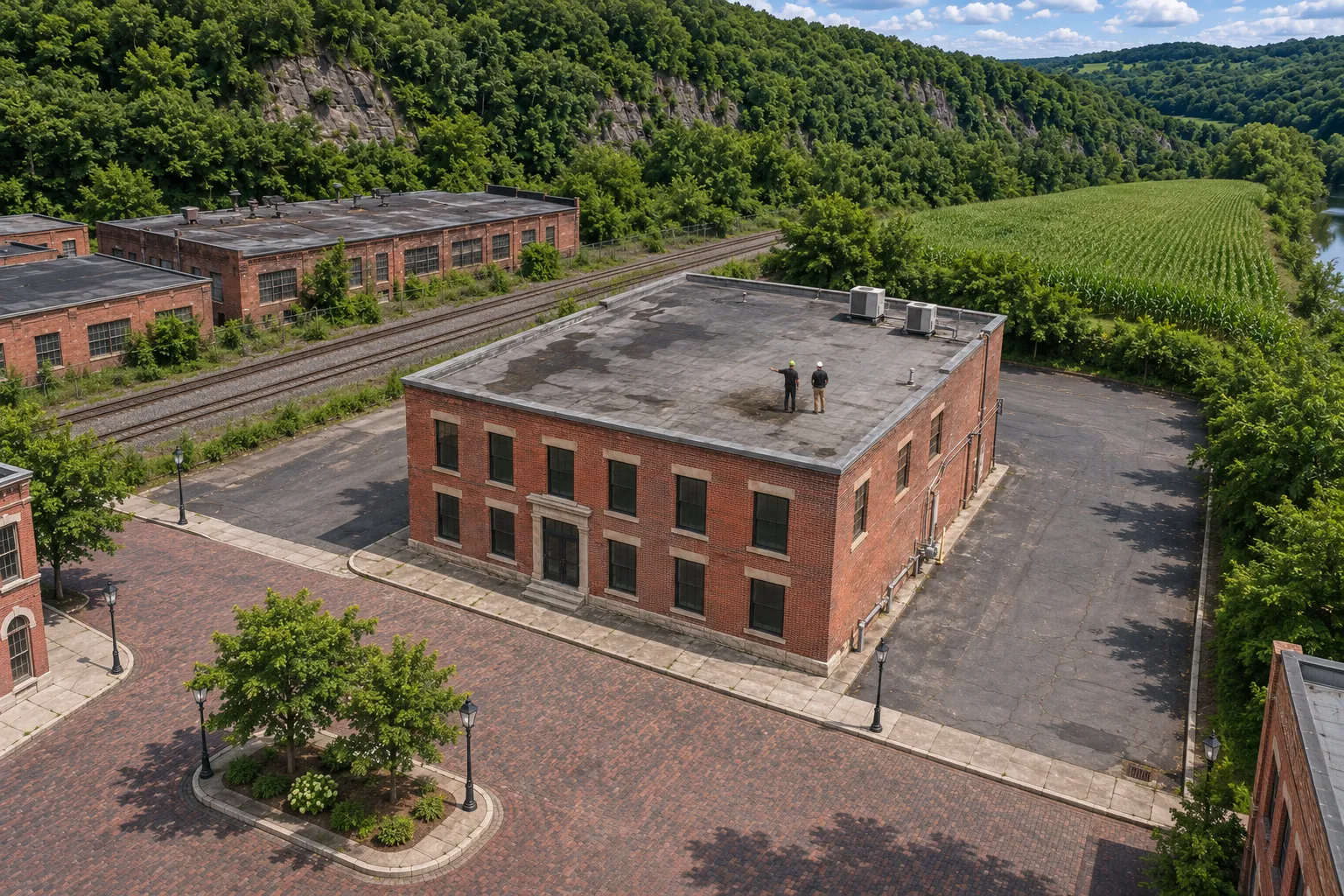
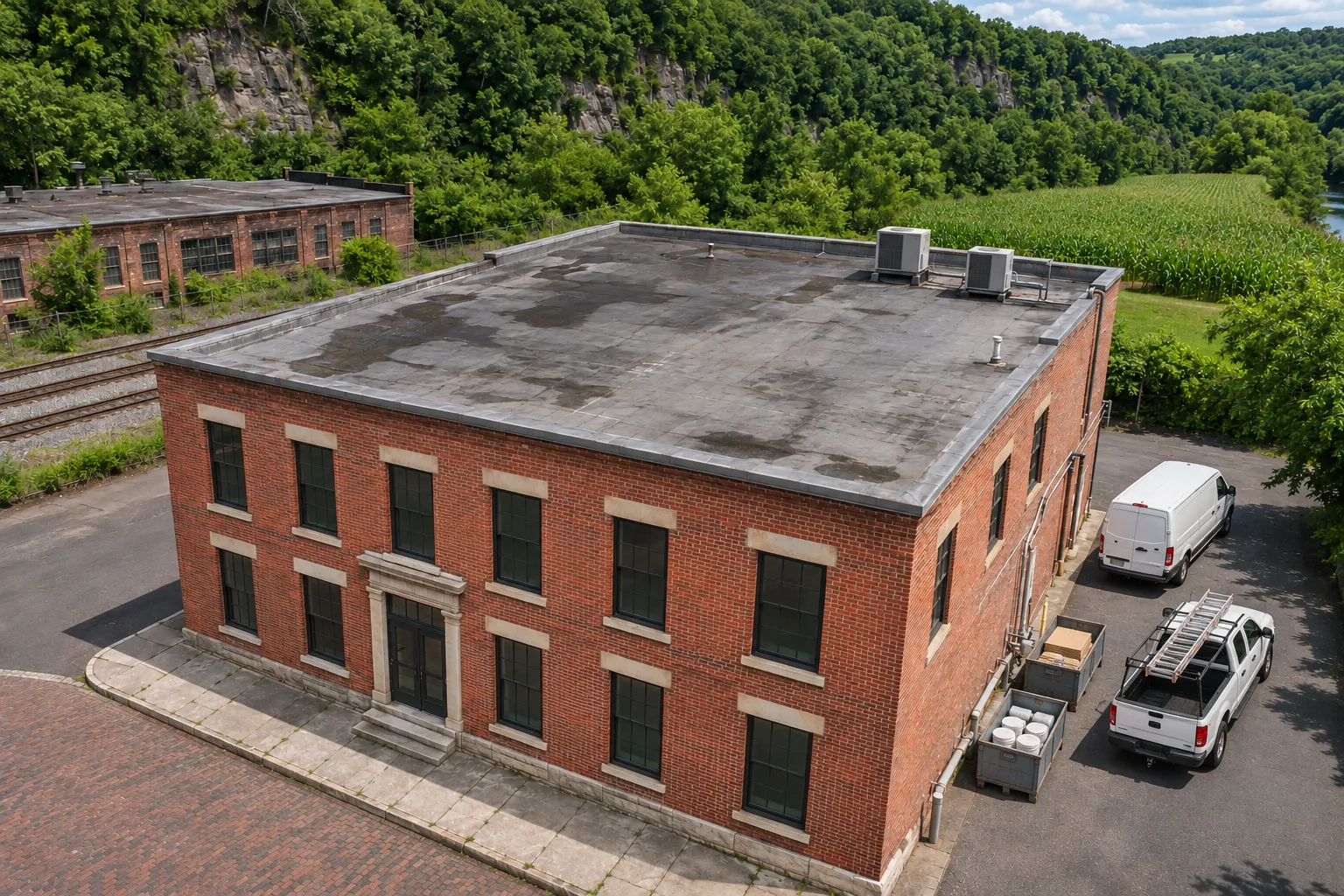
We mark where water lands, how much, and when, including storm direction, snowmelt, or equipment running at the time.
Seams, curbs, walls, and drains above the marks are checked, and the likely path is traced along deck flutes.
Where the source stays unclear, a controlled water test or a small opening confirms the entry before repair.
After the repair, the interior spot is checked again in the next real rain or melt to confirm the source is closed.
Once a leak is traced, the fix often falls under one of these repair services.
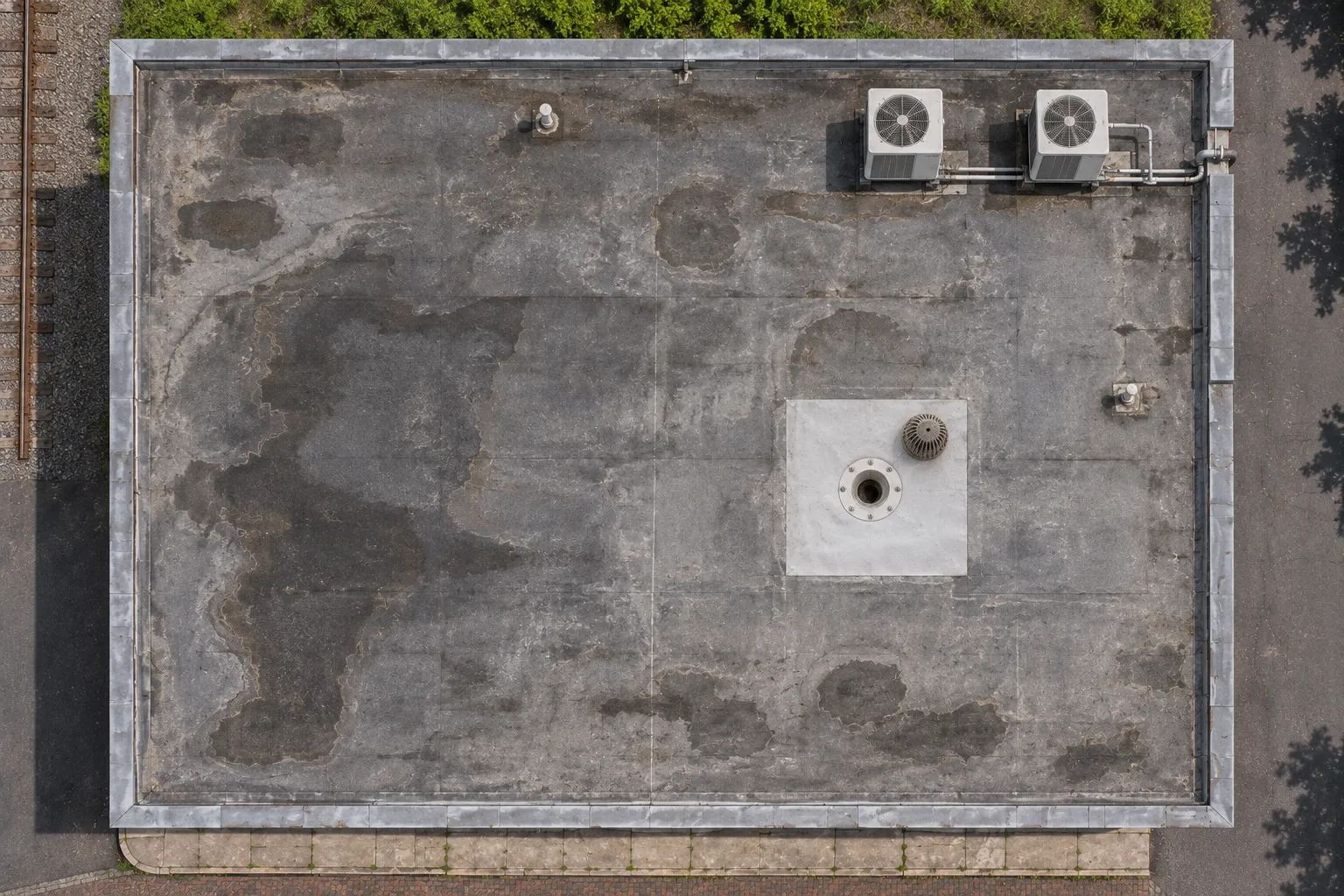
Seam runs, drain rings, and wet boards on flat membrane roofs where the trace ends.
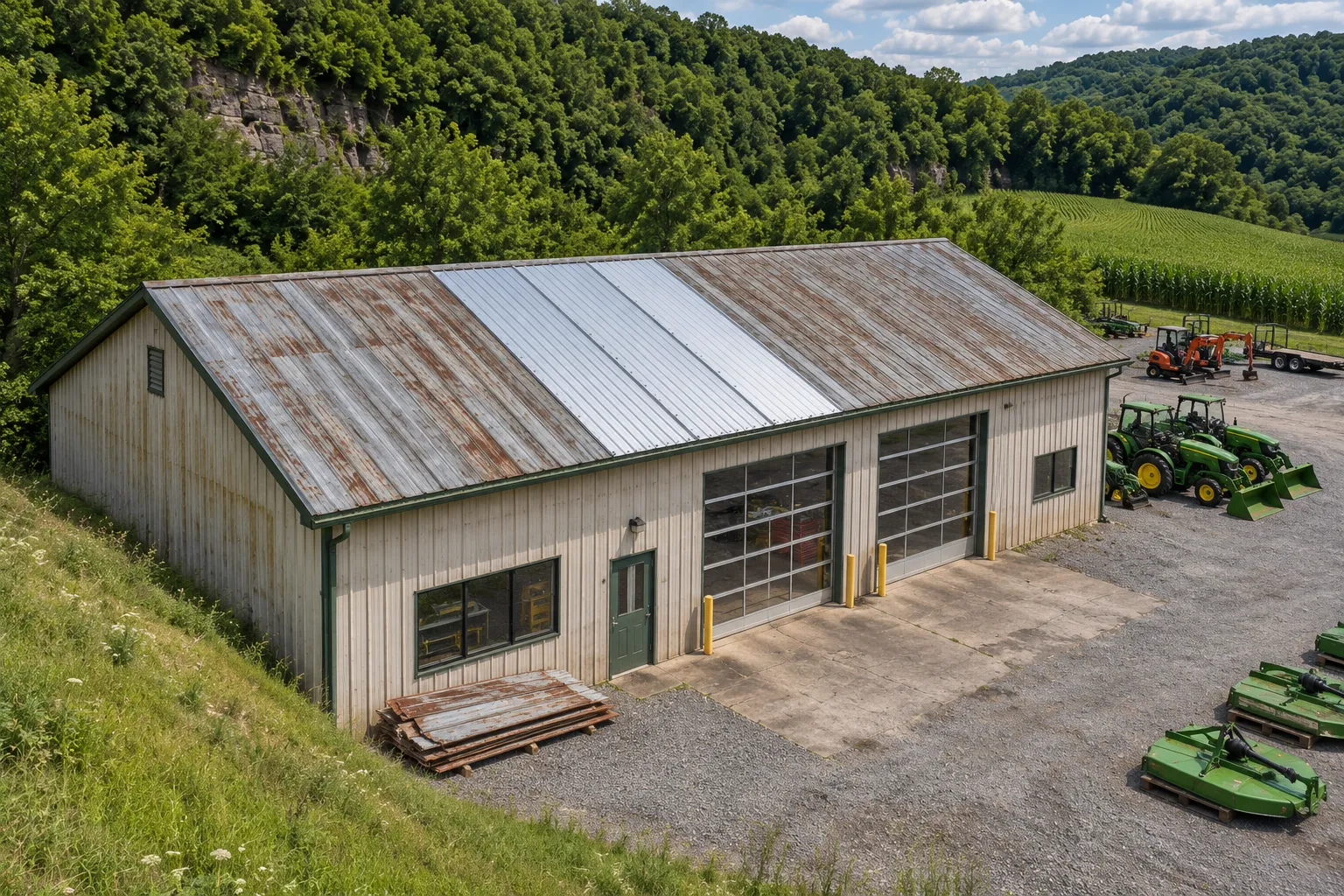
Laps, screws, and penetration flashing on metal buildings that keep dripping in heavy rain.
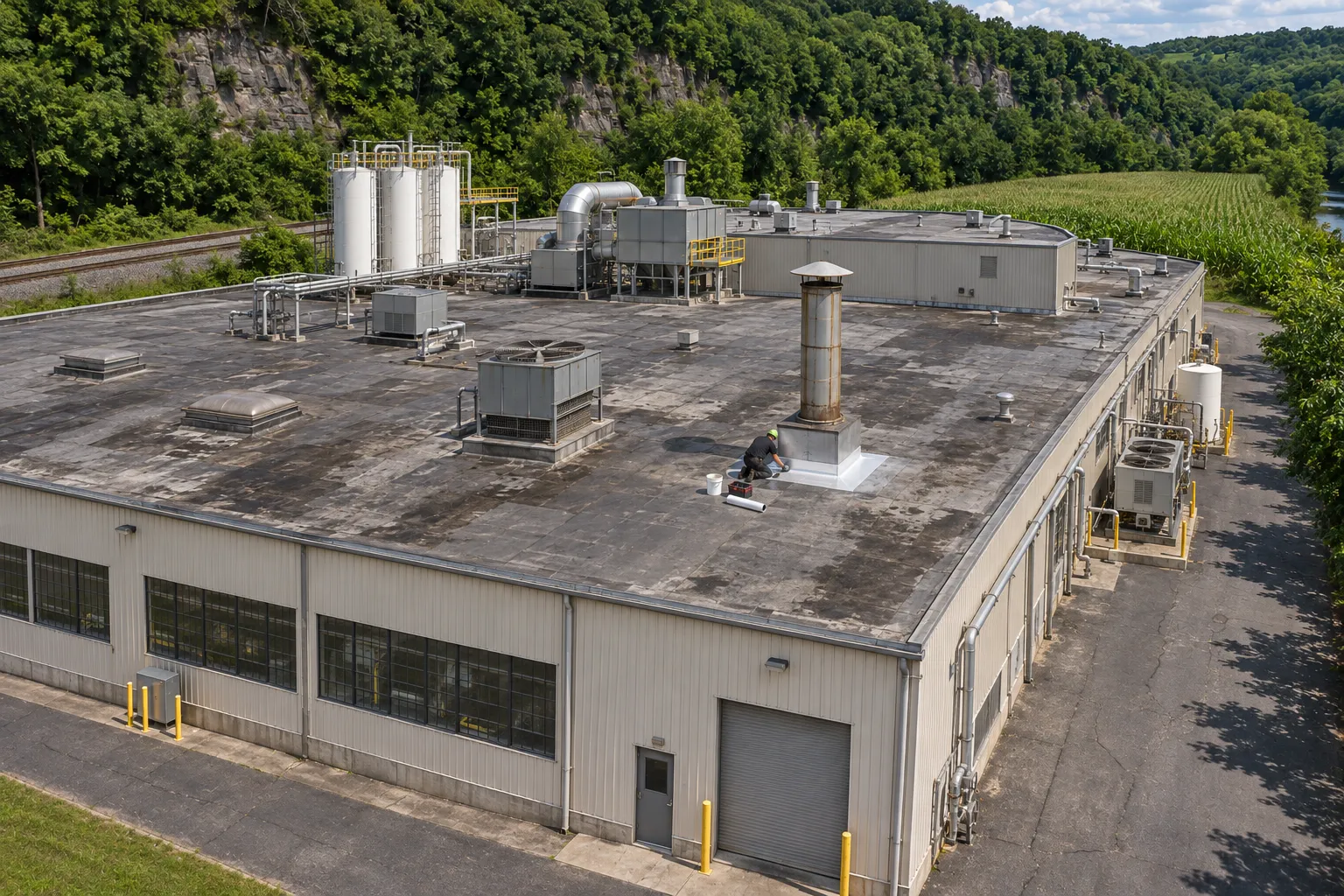
Equipment curbs and stacks on production roofs where leaks threaten machinery below.
Answers on snowmelt, parapet walls, ice, and heavy-rain leaks.
Meltwater collects and moves through roof layers before it shows inside, so dripping can lag the thaw. We check blocked drains and nearby transitions with the interior pattern. Freeze-thaw movement can also open weak spots, so the entry point and how far the moisture spread matter more than when the stain appeared.
Yes. Coping joints and masonry above an intact roof surface can let water in behind the flashing. We check them with the flashing terminations and any damp interior wall. A flat patch at the base never stops water feeding in from higher up.
Ice in gutters slows runoff and holds meltwater against edge joints and seams. We look at the drainage path and any heat loss feeding the ice once access is safe. Heavy wet snow raises structural questions that need their own qualified review.
A leak in unusually heavy rain still points to a defect or drainage problem worth investigating. We compare storm direction, water levels, and roof details with the wet area inside. Staying dry in light showers says little about how seams and outlets handle heavy runoff.
Wait. Interior repairs before the roof source is confirmed tend to get stained again. Protect the space, take photos of the stain, and note when it grows. Once the entry is repaired and checked through a storm, ceiling work can go ahead.
Yes. Storms from one side push water against walls, coping, and flashing that stay dry in other storms. That is why we ask about storm direction. A leak that only shows with an east wind points us to the details facing that way.
Tell us where water shows inside and when it appears. We will trace it and price the repair.