Backed-Out Fasteners
Thermal movement works screws loose and splits their washers. Each loose screw becomes a small hole that drips on the slab or the stock below.
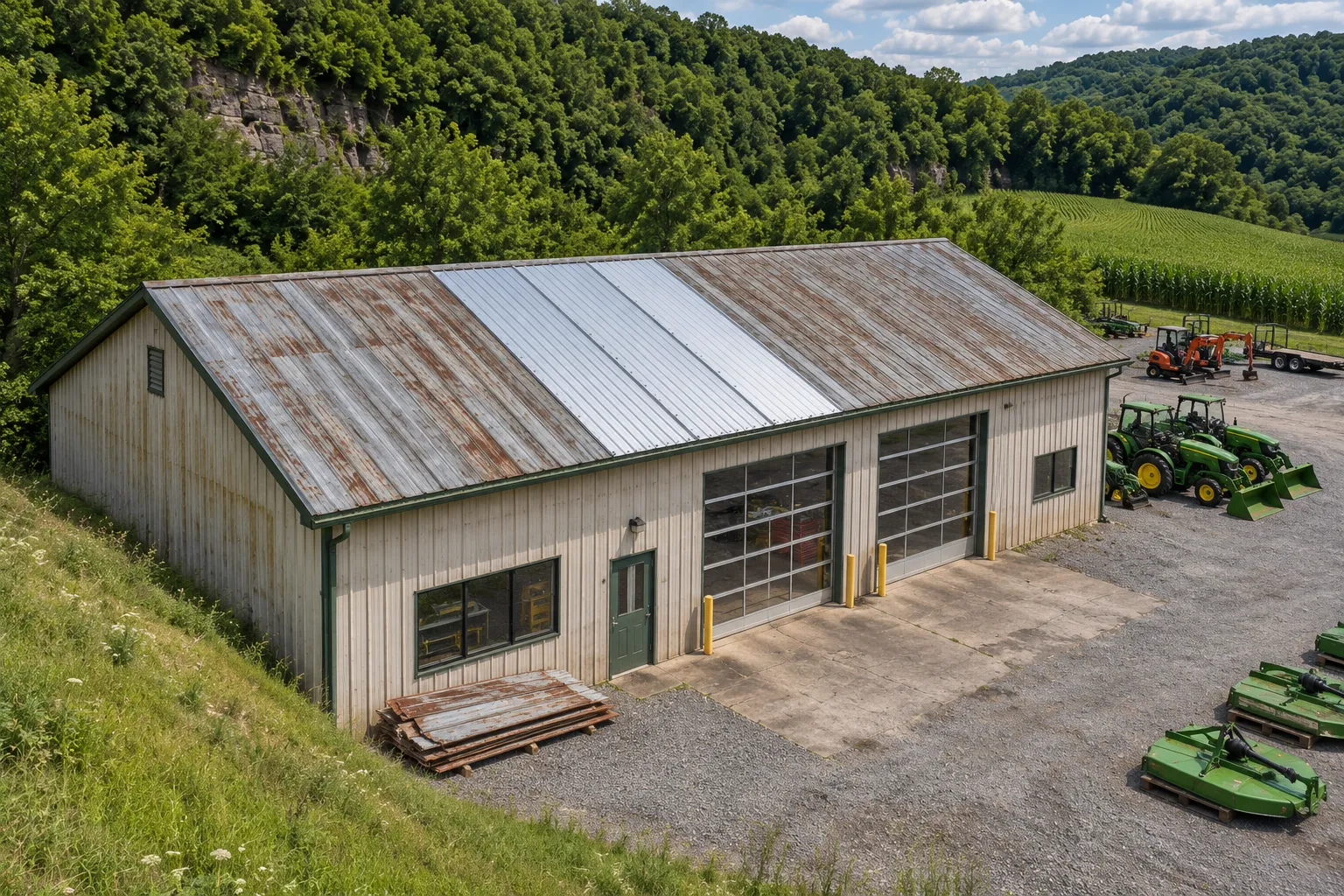
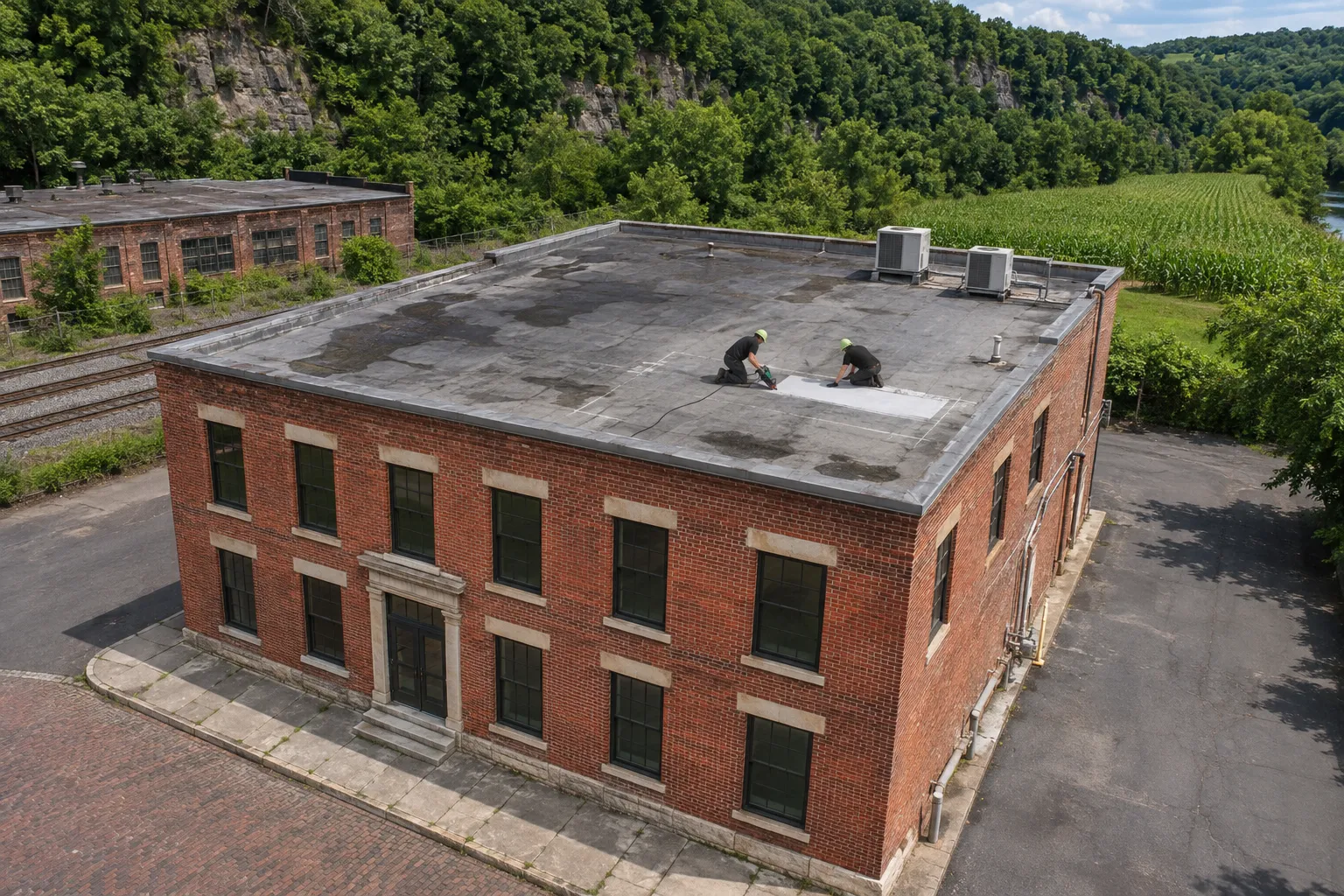
As an Easton commercial metal roof repair contractor, we fix fasteners, laps, panels, and flashing on metal shops, storage buildings, and plant additions.
Easton commercial metal roof repair works best when the panels and supports are still solid. These lists show which conditions point to a repair visit.
Metal roofs leak at joints and attachments long before the panels themselves wear out.
Thermal movement works screws loose and splits their washers. Each loose screw becomes a small hole that drips on the slab or the stock below.
Laps open when sealant ages out or panels move. Water rides the panel rib, crosses the lap, and lands well downslope of the opening.
Rust starts at cut edges, laps, and where debris sits against the metal. Panels with holes are swapped while the supports underneath stay in place.
Pipe boots and curb flashing crack or loosen as the roof moves around them. The fix depends on how the flashing fits the panel profile.
Hail matters most where it splits a lap, loosens a fastener, or cracks flashing. A dent alone says little about whether water can get in.
Layers of mastic and tape cover the joint that failed and keep it out of sight. We remove them to see the connection underneath.
Every metal roof repair starts by finding which joint or attachment is actually letting water in.
Loose screws and failed washers top the list on ribbed roofs. We tighten what holds, upsize where holes are stripped, and replace worn washers.
Flashing is checked for fit, attachment, movement, and drainage. A loose or wrong-shaped piece gets refit or replaced, since more sealant on top leaves it failing underneath.
Rusted or punctured panels come out by the run and new ones lap into solid metal with matching profile and fastening.
Mastic and tape over earlier repairs are removed so the joint, fastener, or penetration below can be judged and fixed directly.
A metal roof repaired at its joints keeps its panels and supports working much longer.
Fixing fasteners, laps, and flashing early keeps water from sitting in the joints, where it rusts the metal from inside. Most of the roof stays in service while only the damaged runs are replaced.
Stopping drips at the laps protects the framing that holds the panels in place.
Shops and storage buildings keep vehicles, tools, and parts dry under the repaired runs.
Each repair is mapped, so a later leak can be checked against what was fixed before.
Call us with which bay is leaking and whether it drips in every rain or only in heavy storms.
Metal roof repairs move between the panels above and the bays below. This is the usual order.
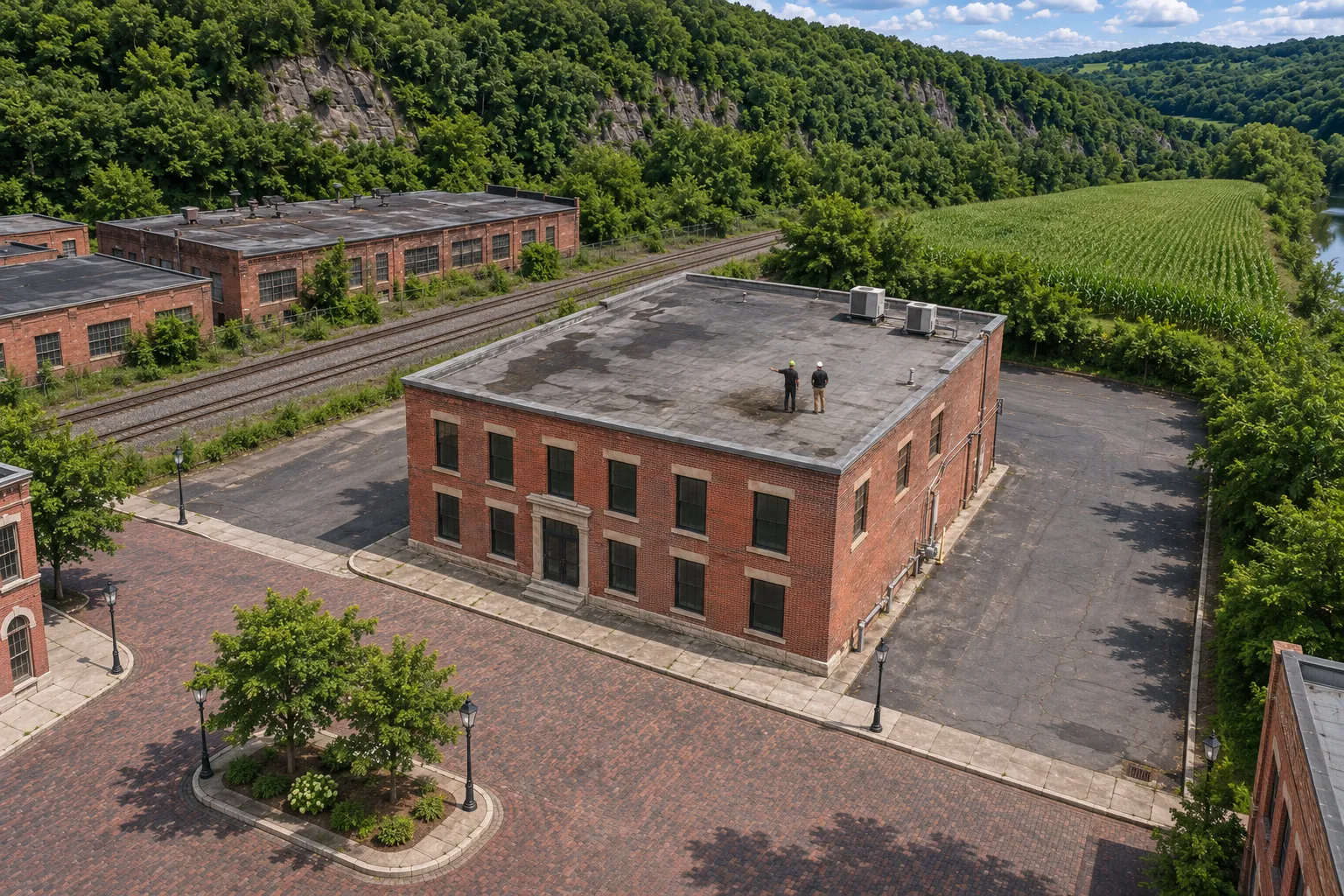
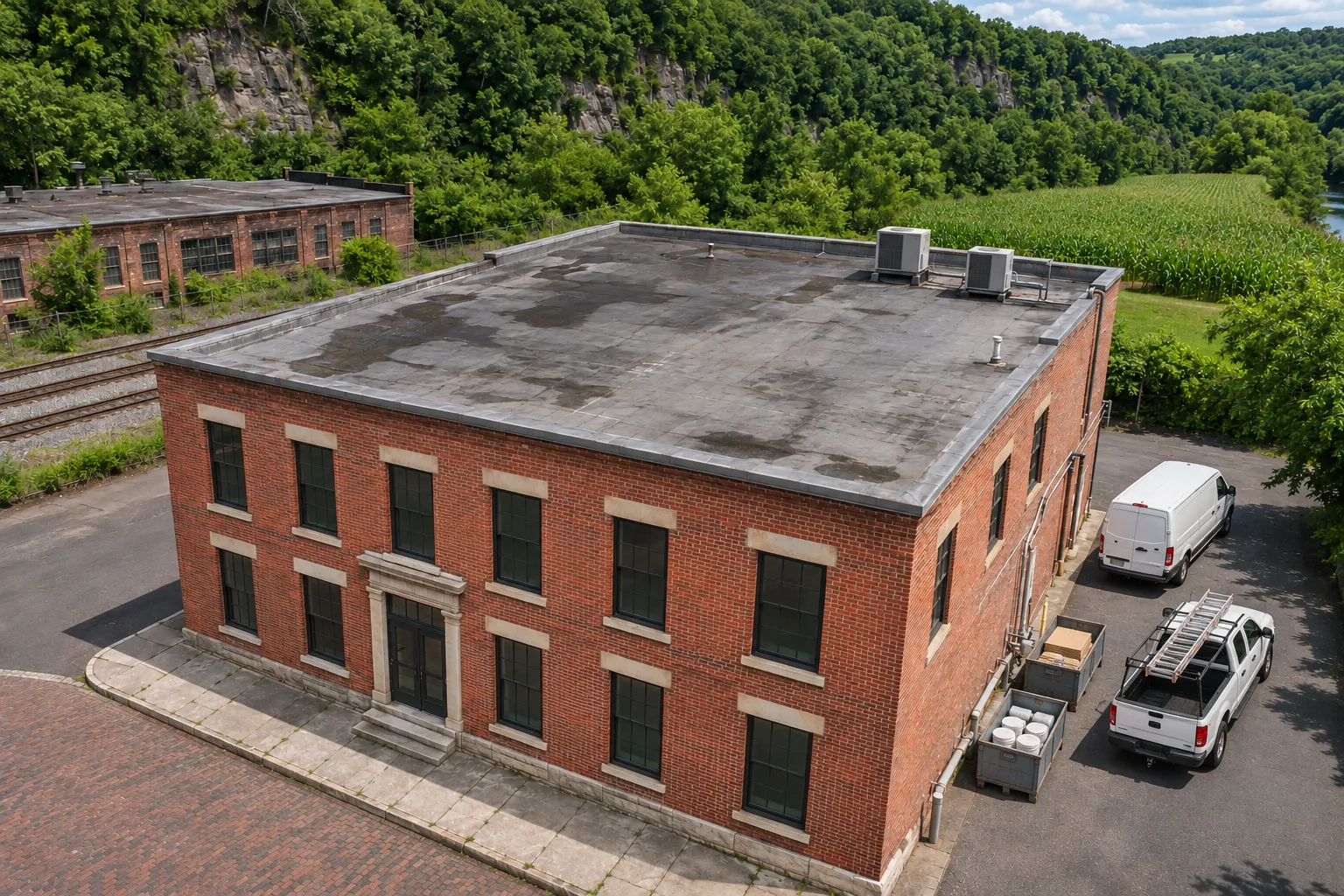
We walk the bays below and mark drip points, rust stains on the slab, and any wet insulation facing hanging under the panels.
Fastener rows, laps, ridge and eave closures, and penetrations above the drip marks are checked by hand.
Stock, vehicles, and equipment under the work area are moved or covered before any panel is opened.
Fasteners, laps, flashing, or whole panels are repaired or replaced, then the area is checked before we leave the roof.
Metal buildings often share a site with flat roofs, plant roofs, or leaks with no obvious source.
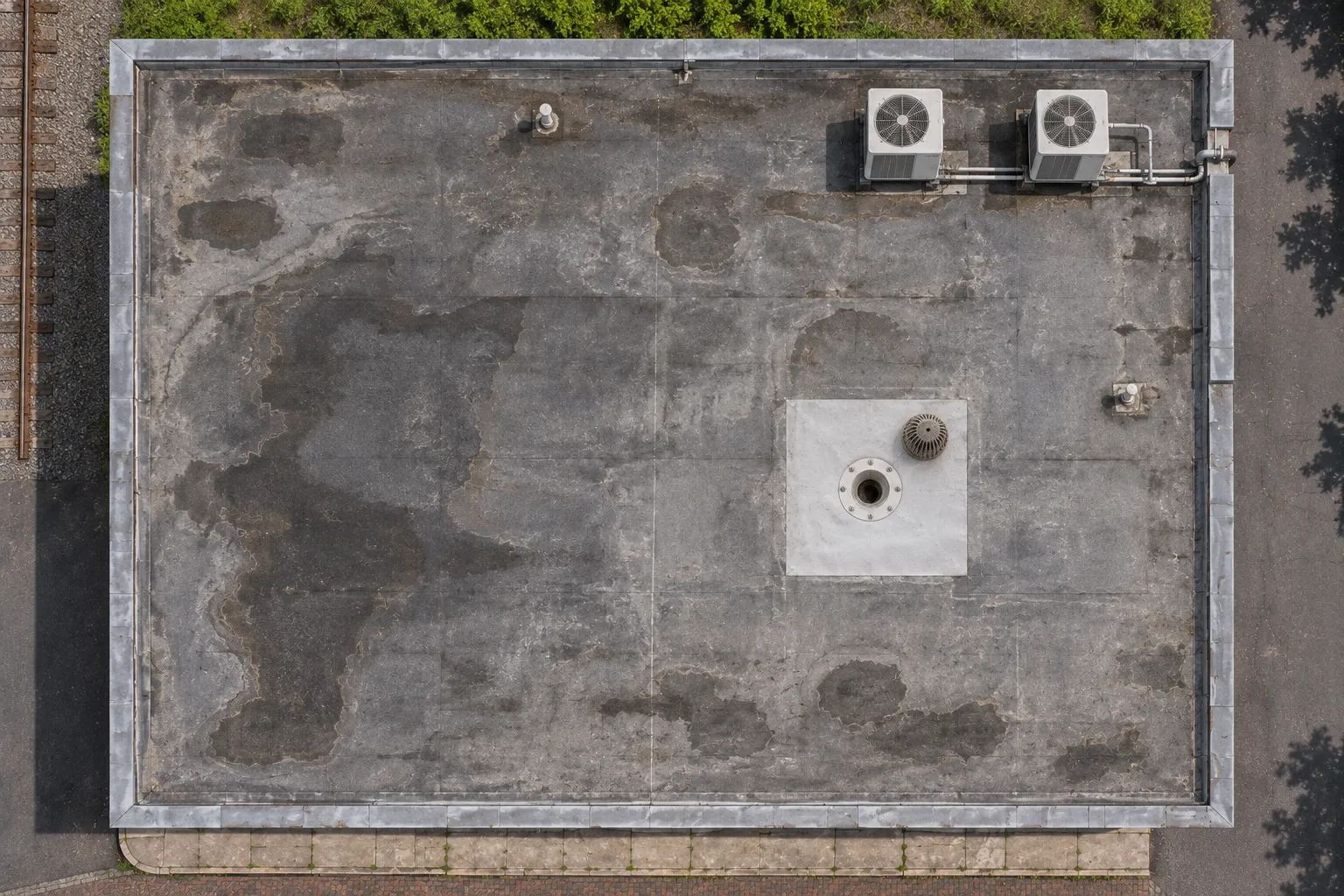
Low-slope office or loading sections attached to a metal building, where seams and drains need attention.
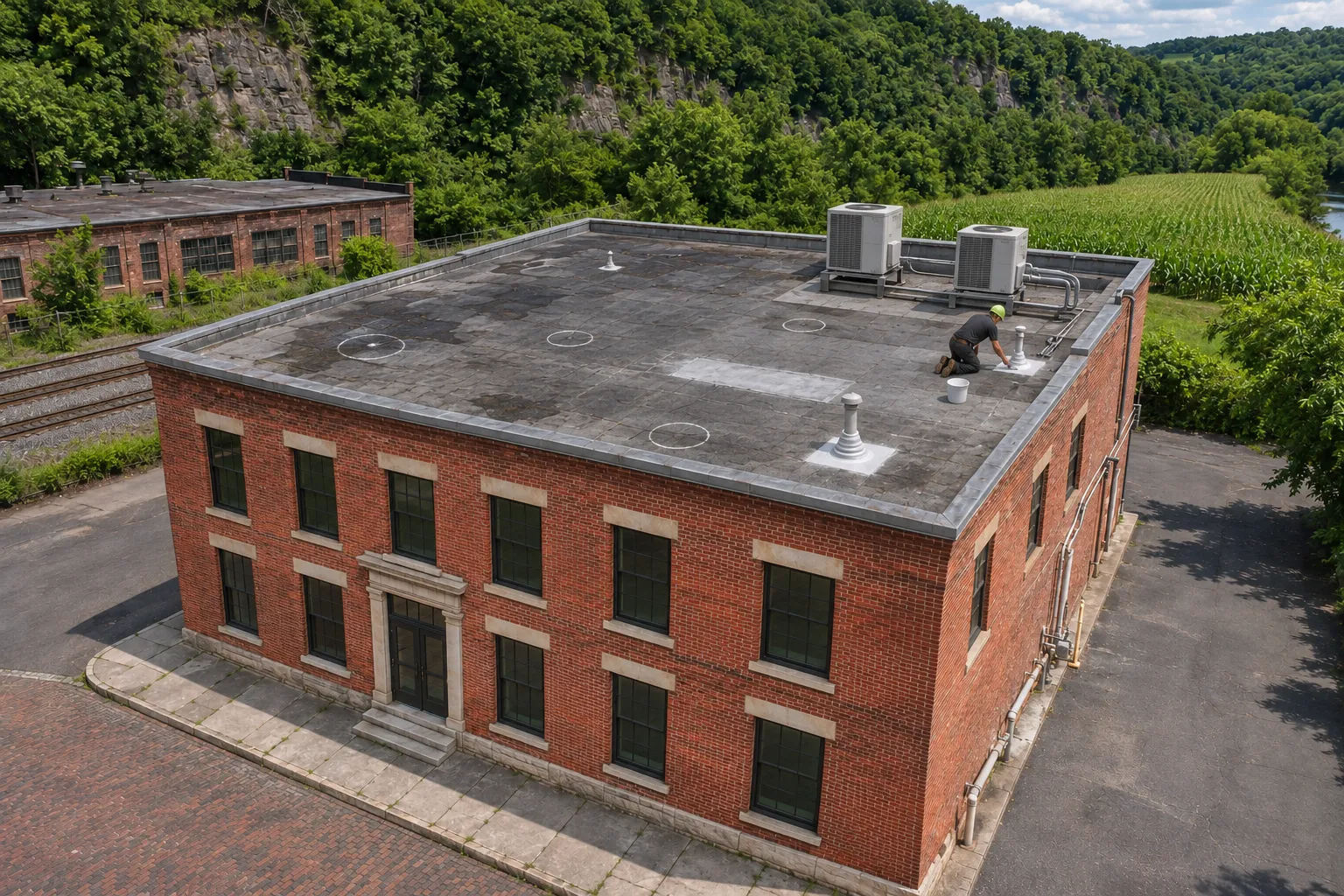
Leaks that move around the building or appear only with snowmelt and need a traced water path.
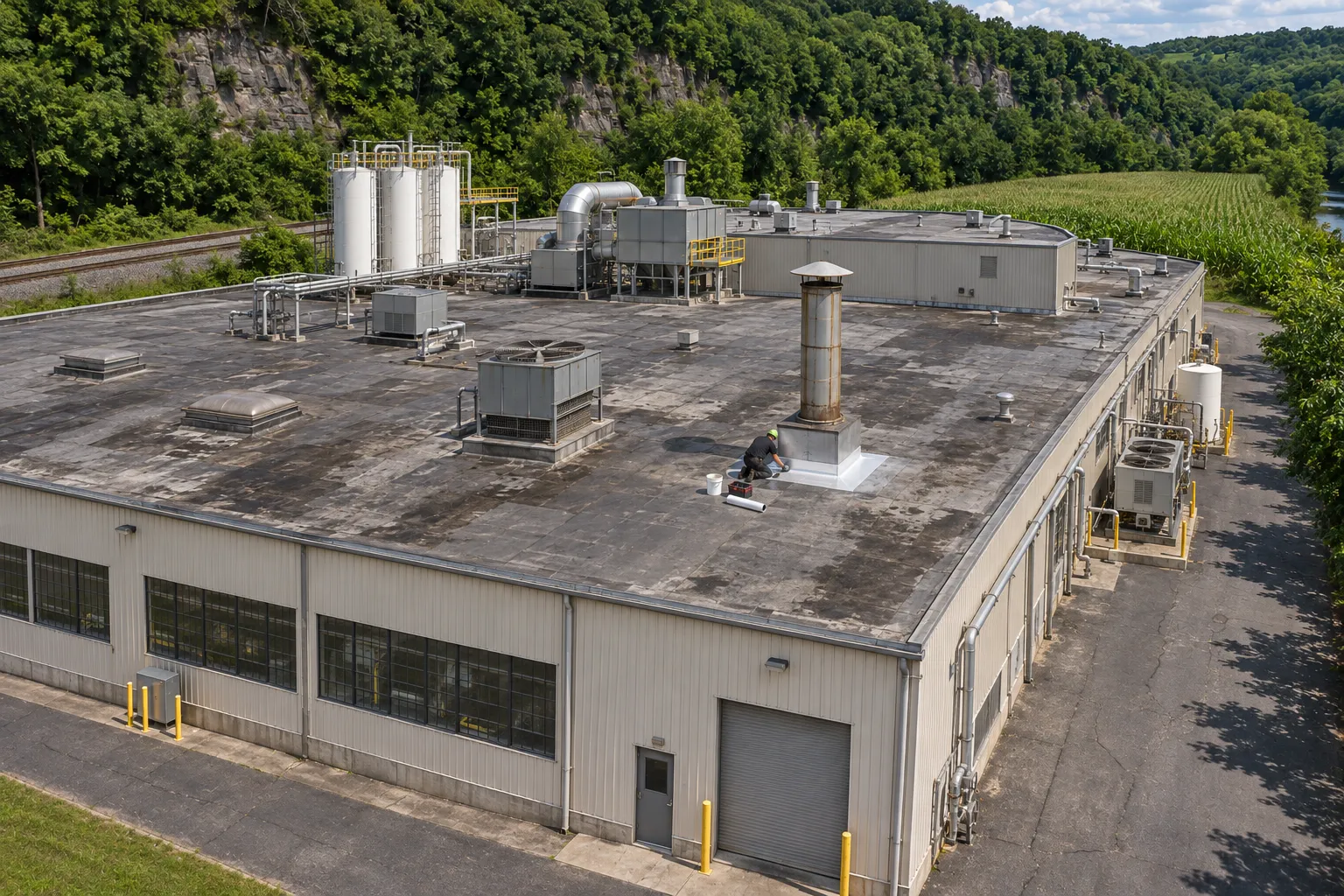
Production buildings where exhaust stacks pass through the roof and vibration loosens the flashing.
Answers on roof life, flashing, hail, and leak causes for metal commercial roofs.
Fastening, supports, corrosion, and hidden moisture at the joints matter more than how the panels look from the ground. A repair can restore one connection while other parts keep wearing. We base planning on condition and maintenance findings, so we give no promised number of years.
It covers fit, attachment, movement, and drainage around the penetration. We check how the flashing sits against the panel profile before choosing a detail. Adding sealant again and again can leave a badly shaped or loose piece failing under the new layer.
Punctures, split laps, and damaged flashing or fastening need close attention. We judge the whole detail, so a deep dent on a solid panel can rank below a small split at a lap. Any recent leak is traced too, since a nearby mark does not prove water entered there.
At the joint, fastener, or penetration the earlier repair covered. We check the connections next to it for rust or movement under the patch material. The old repair is a useful clue, but another defect can sit along the same water path.
Fasteners lead the list: screws that back out as panels expand and contract, and washers that crack with age. Laps and penetration flashing come next. Each one shows up as a drip below, often some distance downslope of the actual opening.
Tell us which bay is leaking and what kind of metal roof sits above it. We will inspect it and price the repair.